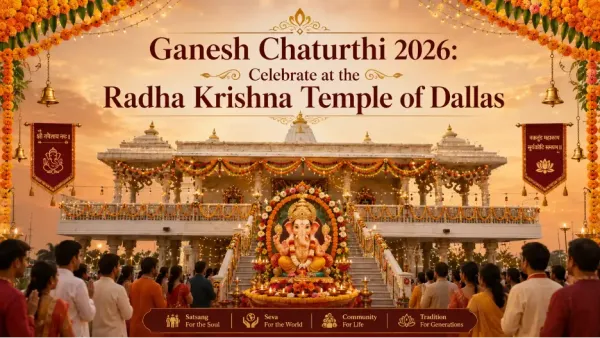
The first cry rises from somewhere near Bappa and finds its way into hundreds of hearts before the dhol has even finished answering it.
“Ganpati Bappa Morya!”
Hundreds of voices rise together as cymbals ring through Radha Krishna Temple of Dallas, flowers gather at Bappa’s feet, and families press close around Him, some singing, some dancing, others simply standing with folded hands, unable to look away.
Then comes the second cry, the one that changes the rasa of the evening.
“Pudhchya Varshi Lavkar Ya!”
Come again soon next year. The words leave the lips easily, but the heart is slower to accept what they mean, because hidden inside come again soon is the truth that Bappa must first go.
For twelve days, no one had to think about missing Him, because He was here.

.webp)
From the sacred Ganesh Sthapana and Pooja with Swami Mukundananda, Bappa gradually became part of the rhythm of life at Radha Krishna Temple of Dallas. This year carries an added blessing, as Ganesh Mahotsav 2026 brings devotees into a sacred Ashtavinayak journey, with the darshan of Mayureshwar of Morgaon, Siddhivinayak of Siddhatek, Ballaleshwar of Pali, Varadavinayak of Mahad, Chintamani of Theur, Girijatmaj of Lenyadri, Vighneshwar of Ozar, and Mahaganapati of Ranjangaon.
Names associated with sacred places far across the ocean have become part of the devotional landscape of Radha Krishna Temple of Dallas, as children learn the eight sacred names, elders pause before each form with folded hands, and families move from one darshan to another, carrying home memories that will outlast the festival itself.
Those memories deepen every evening, as devotees bring flowers for Pushpa Archana, gather for Maha Ganesh Abhishek, and let the sounds of aarti, shlokas, and kirtan draw the mind toward His lotus feet, in evenings that also bring Ganesh Havan, Kesar Panchamrit Abhishek, Swami Mukundananda’s special lecture and kirtan, Mahaprasad, and the sweetness of Radhashtami.
Yet Bappa gathers not only praying hands, but entire families: children who draw, sing, and shape Ganesh Ji from clay, families who laugh together through games and return evening after evening, and devotees who come carrying gratitude, or worries too heavy to say aloud, leaving both quietly at His feet.
Through it all, the aarti flame returns every evening, and so do the devotees, perhaps because this is how divine attachment truly grows: not through one overwhelming experience, but through returning again and again until entering the temple feels less like an occasion and more like coming home.
Twelve days feel brief once someone beloved is about to leave, and on Visarjan evening, yesterday’s joy already carries the tenderness of impending separation, as the devotee lingers a moment longer on the curve of Bappa’s trunk, His raised hand of blessing, and the flowers at His feet.
Nothing has changed in Bappa, yet something has changed within the heart, which has become attached, so that even before Bappa leaves, it has already begun missing Him. This is virah.
From Milan to Virah: When Bappa Moves from the Eyes to the Mind

In rasik bhakti, virah is not merely the sadness of separation. It is love refusing to become forgetful.
The twelve days with Bappa are milan, the sweetness of His nearness, when He comes and devotees welcome, serve, and sing before Him. Visarjan brings virah, when that nearness must take another form.
In the rasik tradition of bhakti illuminated through the teachings of Swami Mukundananda, the mind is central to spiritual practice: the hands may perform aarti and the lips may chant the Divine Name, but devotion transforms the heart only when the mind itself becomes lovingly attached to God.
The Bhagavad Gita reveals this secret of devotion:
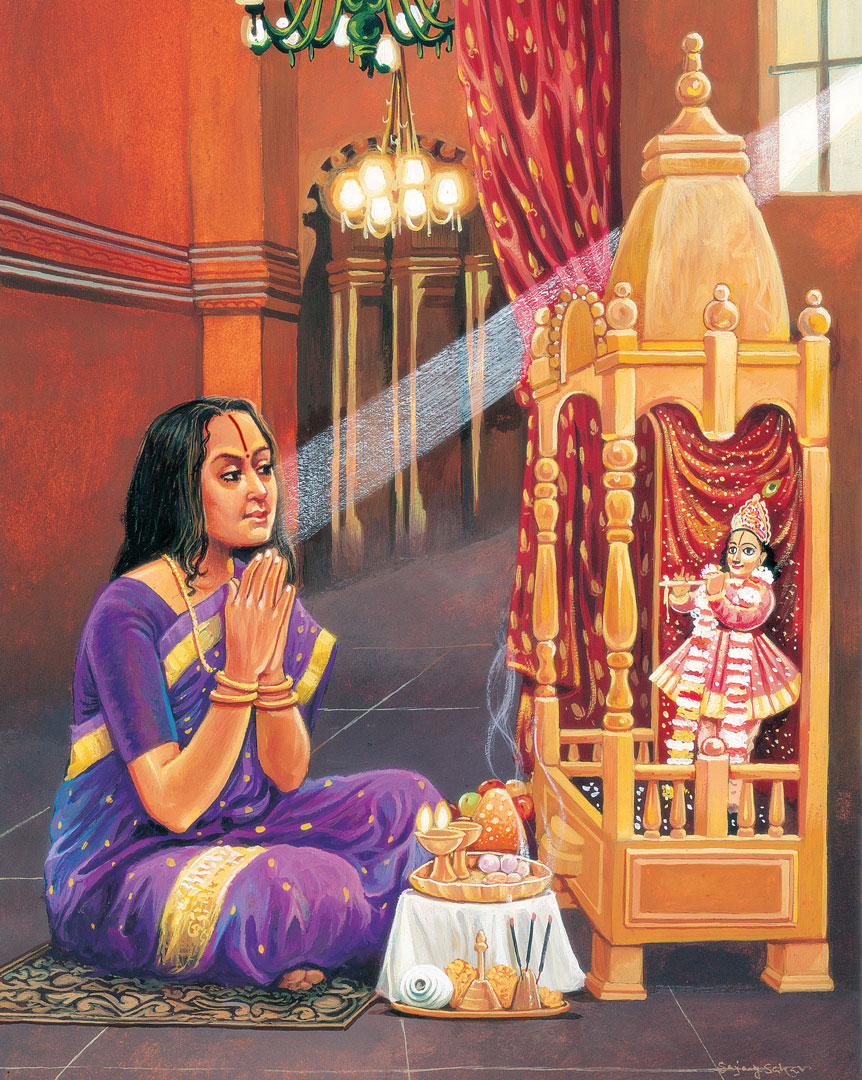
मय्येव मन आधत्स्व मयि बुद्धिं निवेशय ।
निवसिष्यसि मय्येव अत ऊर्ध्वं न संशय: ॥ 8॥
mayy eva mana ādhatsva mayi buddhiṁ niveśhaya
nivasiṣhyasi mayy eva ata ūrdhvaṁ na sanśhayaḥ
BG 12.8: Fix your mind on Me alone and surrender your intellect to Me. There upon, you will always live in Me. Of this, there is no doubt.
In his commentary on this verse, Swami Mukundananda emphasizes that mere physical devotion is not sufficient, and that the mind must be absorbed in God: every darshan gives it Bappa’s form to remember, every kirtan gives it His Name to hold, and every act of seva turns attention away from the self and toward the Beloved.
While Bappa is visible, remembrance feels almost effortless, because His form stands before the eyes and the entire atmosphere helps the mind return to Him. Then comes Visarjan: the lights come down, the dhol falls quiet, families return home, and the place where Bappa stood looks different, even though the impressions loving remembrance has created do not have to disappear with the decorations.
This is where virah can deepen what milan began.
The devotee who could behold Bappa whenever the eyes opened must now learn to behold Him when the eyes close. For twelve days, Bappa gave the eyes His darshan, and now virah asks the mind to remember Him. For twelve days, flowers were placed at His feet, and now devotion asks that everyday actions become offerings. For twelve days, wishes were brought before Vighnaharta, and now surrender asks the heart to entrust even the outcome of those wishes to Him.
The clay may return to the elements, but the mind has received something the water cannot take away. Bappa’s remembrance must now be kept where Visarjan cannot reach it.
When Virah Becomes Smaran
After Visarjan, ordinary life returns quickly, and the sacred days begin becoming memories. Yet something of Bappa remains: an aarti returns to the mind while driving, the sight of a modak brings back an evening at the temple, and the words “Ganpati Bappa Morya” carry the heart back to that evening when hundreds of voices rose together.
During milan, remembrance was supported by Bappa’s visible presence. During virah, it must arise from love itself. Swami Mukundananda explains that the mind grows attached to whatever it repeatedly contemplates, and the worldly mind has wandered for years among ambitions, anxieties, and countless attractions. Bhakti redirects that same capacity for attachment toward God, gently bringing it back until remembrance carries the sweetness of love.
Swamiji brings this into focus in his commentary on Bhagavad Gita 9.27, citing Narad Bhakti Darshan to describe devotion as offering every activity to God, and feeling intense separation when His remembrance is lost. The deepest separation is not only when Bappa disappears from the eyes. When the heart has tasted the sweetness of His remembrance, even forgetting Him begins to feel like separation.
This also transforms the prayer to Vighnaharta. Devotees naturally ask Him to remove obstacles in family, work, and health, but as devotion deepens, a quieter vighna becomes visible: the restlessness, pride, and resentment that occupy the very mind that longs to belong to God.
The prayer to Vighnaharta therefore becomes more intimate:
May He remove not only the obstacle before the devotee, but whatever stands between the devotee and loving remembrance of God.
This naturally leads toward sharanagati:
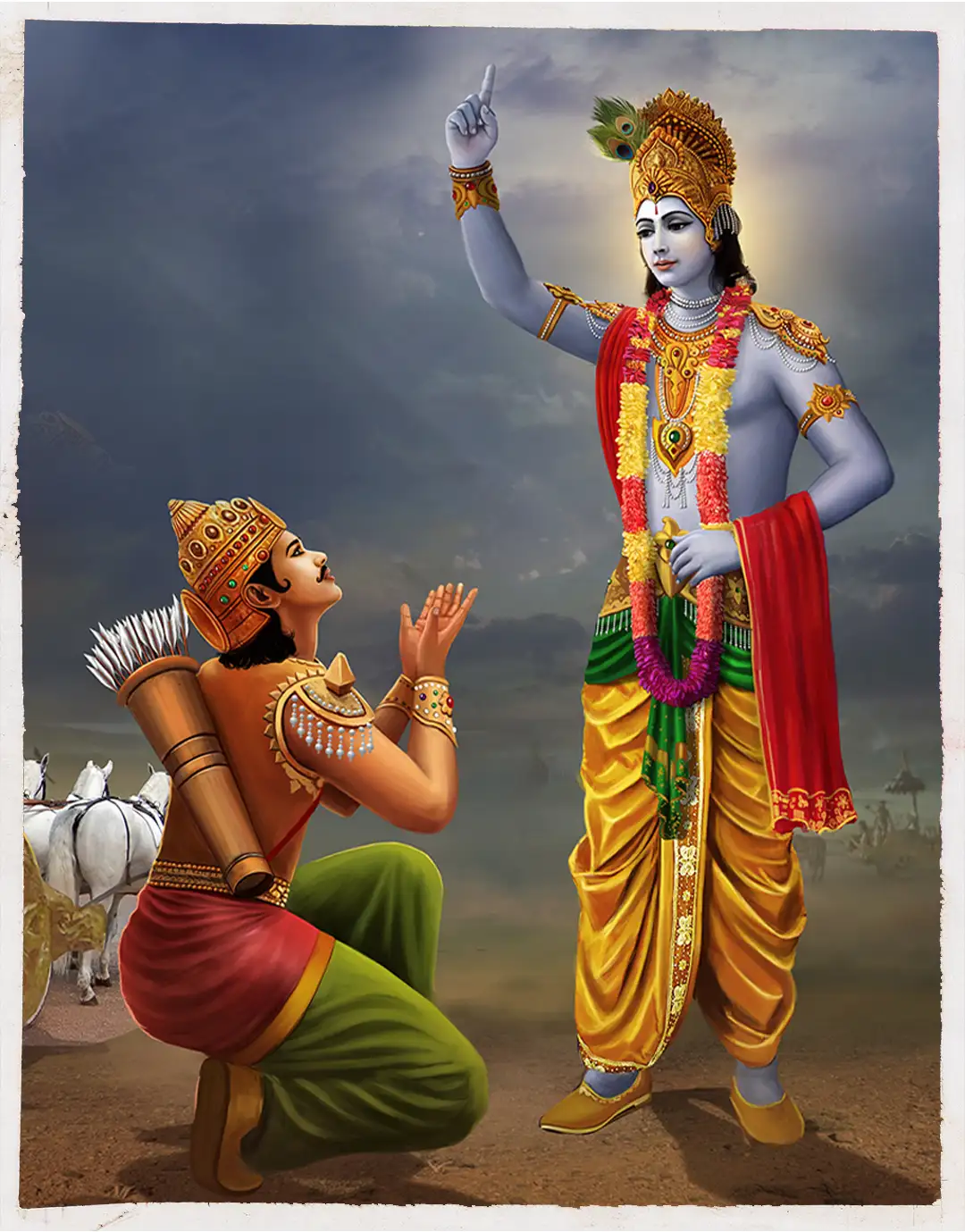
सर्वधर्मान्परित्यज्य मामेकं शरणं व्रज ।
अहं त्वां सर्वपापेभ्यो मोक्षयिष्यामि मा शुच: ॥ 66॥
sarva-dharmān parityajya mām ekaṁ śharaṇaṁ vraja
ahaṁ tvāṁ sarva-pāpebhyo mokṣhayiṣhyāmi mā śhuchaḥ
BG 18.66: Abandon all varieties of dharmas and simply surrender unto Me alone. I shall liberate you from all sinful reactions; do not fear.
Visarjan gives surrender a visible form, as the hands that welcomed Bappa must eventually open and release the form they wish to keep near. The prayer that began with, “Bappa, arrange everything according to my wish,” matures into, “Bappa, let me remain Yours through whatever You arrange.” The greatest blessing is not a perfectly arranged world, but a mind that does not lose God when the world refuses to arrange itself.
When Seva Keeps the Thread of Milan Unbroken
During Ganesh Mahotsav, devotion has a visible language, as hands carry flowers, prepare bhog, light lamps, distribute Mahaprasad, and welcome families in. After Visarjan, that love still needs somewhere to go, and this is where seva gives love a way to continue.
Shree Krishna gives this principle of devotional offering in the Bhagavad Gita:
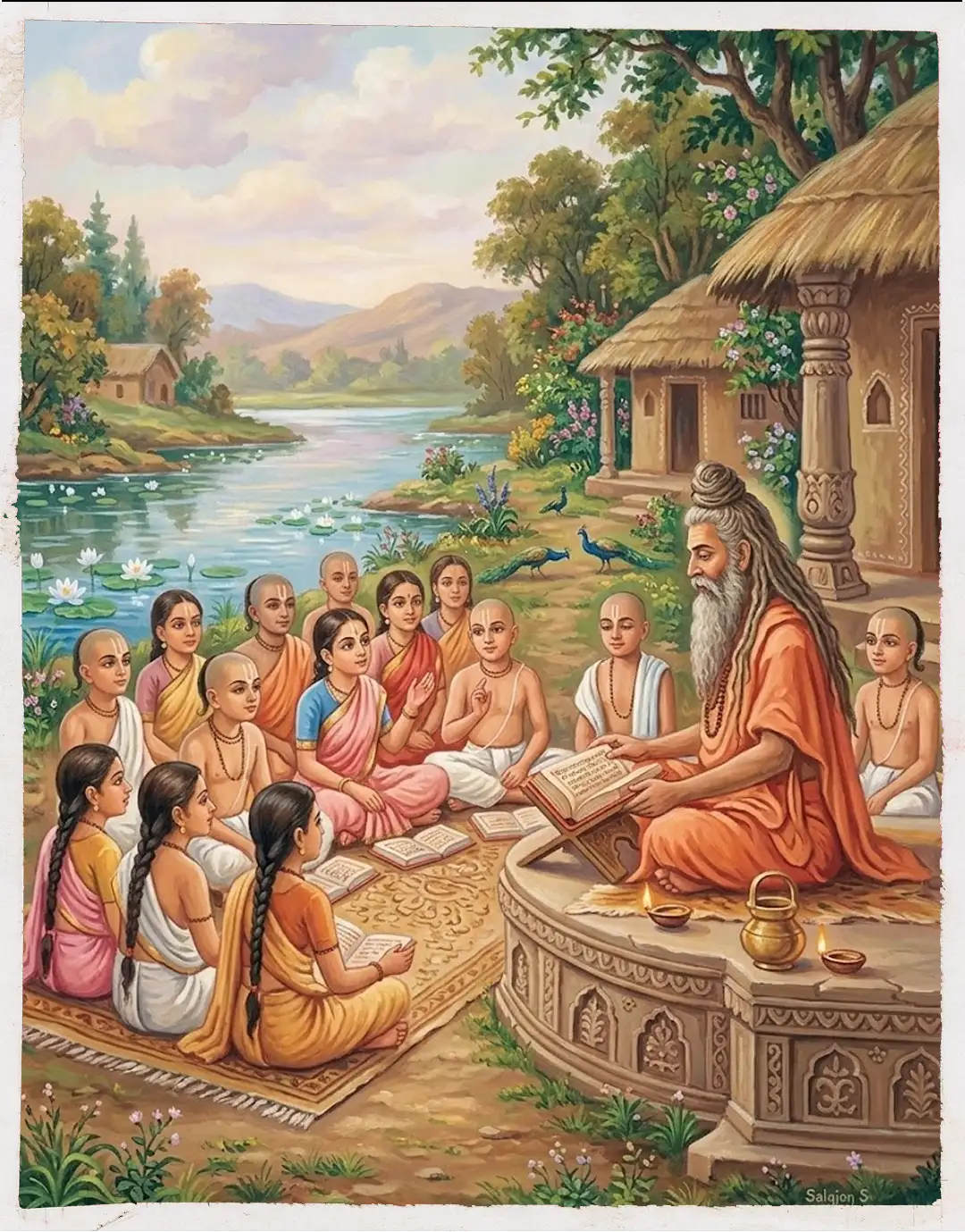
यत्करोषि यदश्नासि यज्जुहोषि ददासि यत् ।
यत्तपस्यसि कौन्तेय तत्कुरुष्व मदर्पणम् ॥ 27॥
yat karoṣhi yad aśhnāsi yaj juhoṣhi dadāsi yat
yat tapasyasi kaunteya tat kuruṣhva mad-arpaṇam
BG 9.27: Whatever you do, whatever you eat, whatever you offer as oblation to the sacred fire, whatever you bestow as a gift, and whatever austerities you perform, O son of Kunti, do them as an offering to Me.
Swami Mukundananda explains that devotion should not remain restricted to the temple room, but engaged throughout life. For twelve days, devotees brought offerings to Bappa. After Visarjan, life itself becomes the offering.

A meal prepared for the family can carry seva bhav, honest work can become an offering, and helping someone without seeking recognition, restraining anger, or speaking gently can all continue the devotion awakened during Ganesh Mahotsav.
This is especially precious for children: a child who watches a parent make time for God learns that spiritual life deserves time, and a child who shapes Bappa from clay may remember only a joyful afternoon, while a seed of remembrance has quietly been planted.
Virah therefore need not leave the devotee helpless. The hands that can no longer offer durva can still serve, the lips can still chant, and the mind can still return lovingly to God, so the months of waiting never become months of forgetting.
When the Heart Begins Wanting Bappa Himself
Bhakti has a way of changing what the heart desires. The devotee may first approach Vighnaharta seeking the removal of an obstacle, but repeated remembrance slowly turns wanting something from Bappa into wanting Bappa Himself, and the deepest concern becomes not an unfulfilled wish, but a mind so absorbed in the world that it forgets the One before whom the wish was placed. This is virah ripening into longing for divine love.
The devotee begins longing not merely for another darshan, but for a heart in which every darshan leaves an enduring impression, not merely for another kirtan, but for a mind in which the Divine Name continues after the instruments fall silent, and not merely for another festival, but for devotion that survives the distance between them.
The prayer becomes tender: may the love awakened these twelve days remain when the music falls silent, and may Vighnaharta remove the pride that makes the heart feel independent of divine grace, and whatever carries the mind away from God.
For twelve days, devotees gave Bappa a beautifully decorated home. Bhakti now asks them to spend the rest of the year preparing another home for Him within the heart.
September 25: When the Hands Finally Let Go

Then September 25 arrives. From 6:00 to 8:00 PM, Radha Krishna Temple of Dallas gathers for Samuhik Pooja, Ganesh Visarjan, Samuhik Visarjan, a cultural program, and prize distribution. Families arrive carrying their own Ganesh murtis, each one holding a private story of milan, and many homes enter one shared stream of bhav as the Samuhik Pooja gathers them into a single prayer.
Then the cry rises again:
Ganpati Bappa Morya!Pudhchya Varshi Lavkar Ya!
Those words now carry all twelve days within them: Sthapana, archana, abhishek, havan, kirtan, Mahaprasad, children’s laughter, family seva, Swami Mukundananda’s satsang, and the darshan of all eight Ashtavinayak forms. Twelve days of milan are folded into one cry of virah.
Eventually, the murti must be released. The eyes try to hold Bappa’s form a little longer, because love has gathered memories around this smile, this face, these eyes before which so many prayers were silently offered.
Milan allowed the eyes to behold Him. Virah now asks the heart to hold Him, before the moment the hands must finally let Him go.
The Farewell That Does Not End in Forgetfulness
The dhol is still sounding. The cymbals are still answering. Children are calling Your Name, families are singing together, and somewhere in the crowd a devotee is still trying to hold one last image of Your face within the eyes.
Then the cry rises once more through Radha Krishna Temple of Dallas.
Ganpati Bappa Morya!Pudhchya Varshi Lavkar Ya!
Come again soon, Bappa.
The words are the same ones with which we began, but we are not the same devotees who first spoke them. Milan gave our eyes the sweetness of Your form, and virah has shown us how deeply the mind had already become attached to You. For twelve days remembrance came easily, because You stood before us. Now love must learn to remember without a festival to help it.
Perhaps this is where Swamiji’s teaching on remembrance, through Narad Bhakti Darshan, becomes most precious: the deepest separation is not the moment Your murti disappears from our eyes, but the moment the mind, occupied with the world, forgets You. And when love deepens, even forgetfulness begins to feel like separation.
So the prayer of Visarjan becomes quieter now. May we miss You enough to remember You, and may the hands that offered flowers, and the lips that sang Your aarti, keep serving and remembering once the instruments fall silent.
May the mind that became attached to Your form return to You amid work, worry, and all the ordinary hours devotion so easily forgets, and may Vighnaharta remove that greatest vighna between the wandering mind and the Divine: forgetfulness.
May surrender become deeper than the fulfillment of our wishes, may seva give our love somewhere to go, and may the distance between two Ganesh Mahotsavs never become a distance between our minds and God.
The hands open. The murti enters the water, the flowers shift, and the form our eyes have memorized slowly passes from sight. Yet something refuses to leave with You: the aarti remains, the kirtan remains, the seva remains, and the sacred impressions of Your darshan remain, all eight Ashtavinayak forms living on within the memories of families who walked from one darshan to another. Above all, the love remains.
The water receives the murti. It does not receive the love that grew around it.
Our eyes follow You for as long as they can, into that tender instant when there is nothing more for them to hold. The rasik heart does not rush to escape that emptiness. It lets itself miss You, understanding that when longing turns the mind again and again toward God, even separation becomes another form of remembrance.
We came to Ganesh Mahotsav to welcome You. We leave having learned how to miss You, and perhaps that is one of the sweetest gifts You leave behind: a heart that once came asking You to remove its obstacles now leaves asking for something far more precious, that it may never become comfortable forgetting You.
So let the tears come if love brings them, let the dhol keep sounding, and let the children call Your Name with all the innocence in their hearts, as every devotee sends You off with the same cry that holds both the joy of milan and the tenderness of virah:
Ganpati Bappa Morya!Pudhchya Varshi Lavkar Ya!
Come again soon, Bappa.

Until then, remain in every remembrance that turns the mind toward God, every act of seva offered without expectation, every moment of surrender, and every ache of virah that makes the heart search for You again. For twelve days, our eyes had the blessing of finding You here. Now may our minds learn never to lose You.
The water may receive Your form.
May our hearts never lose Your remembrance.
Practical Details for Ganesh Visarjan at RKT Dallas
Devotees may bring their Ganesh murti to the temple on September 25 only, participating in the Visarjan Puja before performing the immersion themselves.
The family that welcomed Bappa is invited to remain with Him through the farewell, folding their hands before Him once more as their children receive one final darshan.
Five Key Takeaways
1. Ganesh Mahotsav is a journey from milan to virah. The twelve days from Sthapana to Visarjan let devotees know Bappa’s nearness through darshan, aarti, kirtan, and seva, and when Visarjan arrives, that milan gives way to virah, where separation can deepen remembrance rather than end it.
2. The mind is where devotion must take root. Swami Mukundananda’s commentary on Bhagavad Gita 12.8 teaches that mere physical devotion is not sufficient, and the mind must become absorbed in God, so Bappa’s darshan gives the mind a sacred form to remember even after Visarjan.
3. The deepest vighna can be forgetfulness of God. Devotees worship Shri Ganesh as Vighnaharta for life’s difficulties, but as bhakti deepens, the prayer asks Him to remove pride, restlessness, and whatever keeps the mind from remembering God.
4. Seva keeps the thread of milan unbroken. Bhagavad Gita 9.27 teaches that our actions can be offered to God, so devotion can continue after the pooja ends, through service, integrity, and ordinary kindness offered with remembrance.
5. Virah can deepen into longing for divine love. Swamiji’s commentary on Bhagavad Gita 9.27 cites Narad Bhakti Darshan on the pain of losing God’s remembrance, so the rasik aspiration after Visarjan is to remember Him so completely that forgetting itself feels like separation.
Frequently Asked Questions
1. When is Ganesh Visarjan 2026 at Radha Krishna Temple of Dallas?
Ganesh Visarjan will be celebrated on Friday, September 25, 2026, from 6:00 to 8:00 PM, with Samuhik Pooja, Ganesh Visarjan, Samuhik Visarjan, a cultural program, and prize distribution concluding the twelve-day Ganesh Mahotsav.
2. Can devotees bring their own Ganesh murti for Visarjan?
Yes. Devotees may bring their Ganesh murti on September 25 only, participate in the Visarjan Puja, and perform the Visarjan themselves. The temple will not accept murtis in advance or provide idol drop-off or storage. Visarjan may also be performed respectfully at home using a bucket of water or small kiddie pool.
3. What is special about the Ashtavinayak journey at Ganesh Mahotsav 2026?
This year, devotees can experience the darshan of all eight revered Ashtavinayak forms: Mayureshwar, Siddhivinayak, Ballaleshwar, Varadavinayak, Chintamani, Girijatmaj, Vighneshwar, and Mahaganapati, bringing the remembrance of this sacred journey into the devotional landscape of Dallas.
4. What do milan and virah mean in Ganesh Visarjan?
Milan expresses the sweetness of Bappa’s nearness, while virah expresses the loving longing experienced in separation. Through the bhakti teachings explored in this article, virah can intensify smaran, allowing the mind to continue lovingly remembering Bappa when His visible form is no longer before the eyes.
5. How can devotion continue after Ganesh Visarjan?
Devotion can continue through satsang, seva, prayer, kirtan, remembrance of the Divine Name, and offering everyday actions to God. As Swami Mukundananda explains in his commentary on Bhagavad Gita 9.27, devotion should not remain restricted to the temple room but should become part of everyday life.