
Introduction: The Festival of Triumph
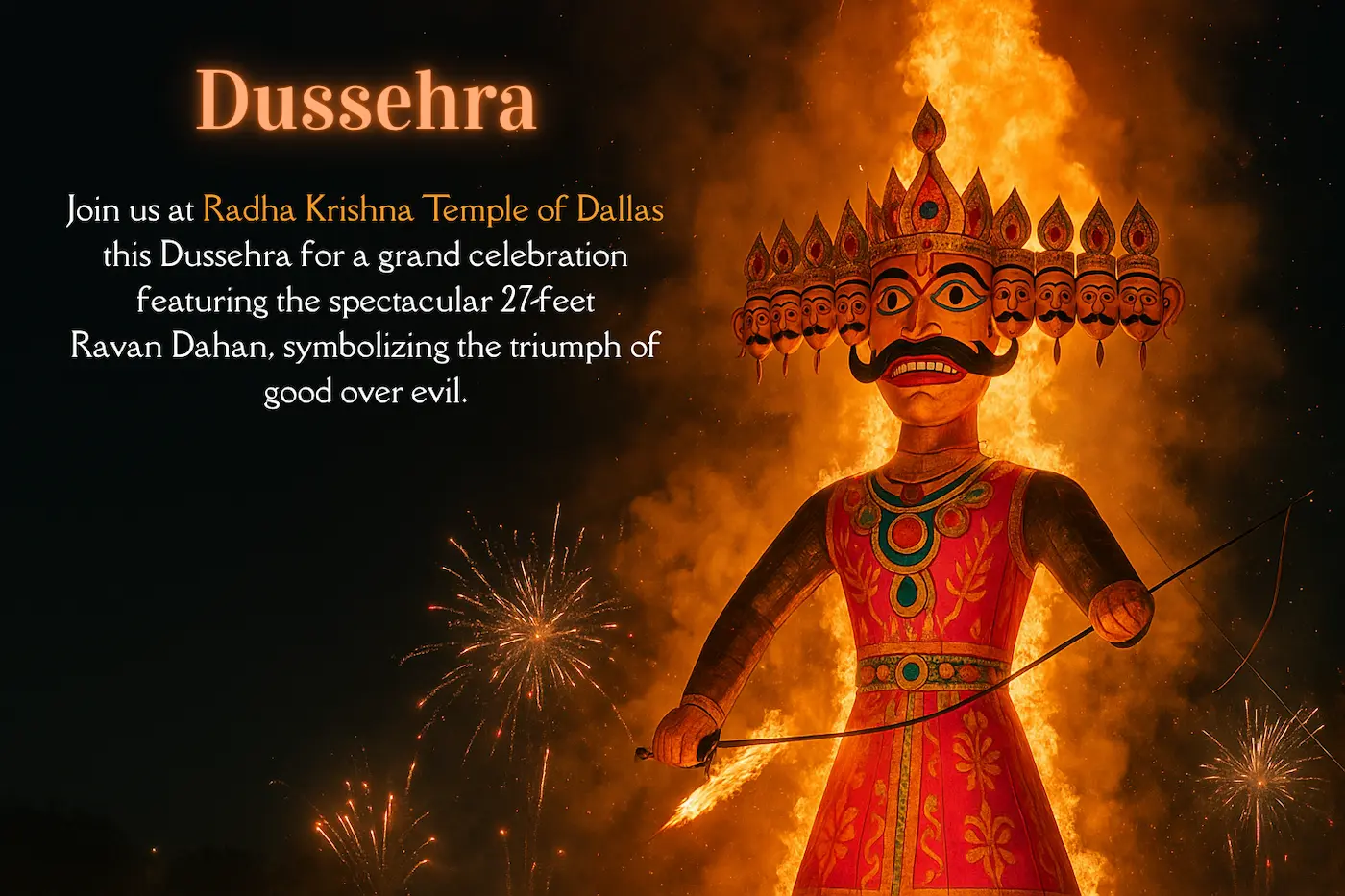
Every autumn, the sound of drums, conch shells, and devotional chants reverberates across India as the festival of Dussehra (also called Vijayadashami) is celebrated. Towering effigies of Ravan, Kumbhakarna, and Meghnath are set aflame, their fiery collapse symbolizing the ultimate victory of good over evil.
Streets bustle with plays of the Ramleela, narrating the story of Lord Ram’s life from the Ramyana. Children marvel at fireworks while elders fold their hands in reverence, reflecting on the deeper meaning of Ram’s victory.
But beyond the celebration lies a profound spiritual message. Dussehra is not merely a commemoration of an ancient battle—it is a reminder of the timeless truth that righteousness (dharma) always prevails over unrighteousness (adharma), and that the demons of lust, anger, pride, and greed within our own hearts must be conquered if we are to live truly victorious lives.
This blog explores Dussehra’s true meaning: Lord Ram’s conquest of Ravan, the symbolism of their battle, its relevance today, and finally how these lessons can guide us on the path of devotion as taught by Swami Mukundananda, especially through the practice of Raganuga Bhakti.
The Story of Ram and Ravan
The Abduction of Sita
The roots of Dussehra lie in the epic Ramyana. Lord Ram, the prince of Ayodhya and an avatar of Lord Vishnu, was exiled to the forest for 14 years along with His wife Sita and brother Lakshmana. During their exile, the demon king Ravan, intoxicated with power and blinded by lust, abducted Sita and carried her away to Lanka.
Ravan was not an ordinary king. He was a scholar of the Vedas, a great devotee of Lord Shiva, and an unmatched warrior. Yet his arrogance and unchecked desires led him to ruin. By kidnapping Sita, he set the stage for his downfall.
The War in Lanka
To rescue Sita, Lord Ram allied with the monkey king Sugriva and the devoted Hanuman. With the help of His army of vanaras (monkeys) and bears, Ram built a bridge across the ocean and marched to Lanka. A fierce battle ensued, culminating in the slaying of Ravan.
On the tenth day of the war, Ram struck Ravan with a Brahmastra (divine arrow), ending his reign of terror. This day is celebrated as Dussehra, marking the triumph of good over evil.
Symbolism of Ravan’s Ten Heads
One of the most striking features of Ravan is his ten heads.
Each head represents a vice:
- Kama (Lust) – uncontrolled desire.
- Krodha (Anger) – destructive fury.
- Lobha (Greed) – insatiable craving for wealth.
- Moha (Attachment) – clinging to illusions.
- Mada (Pride) – arrogance of power and knowledge.
- Matsarya (Jealousy) – envy of others’ progress.
- Ahankara (Ego) – false identification with the body and mind.
- Injustice – misuse of power.
- Cruelty – lack of compassion.
- Selfishness – disregard for the welfare of others.
When we burn effigies of Ravan, we are reminded that these ten “heads” of negativity exist within us. True victory lies not just in Ram’s conquest of Ravan but in our own effort to destroy these vices with the arrow of wisdom and devotion.
Lord Ram as the Embodiment of Dharma

Lord Ram is revered as Maryada Purushottam—the ideal man who lived with perfect righteousness. Unlike Ravan, who let his power fuel arrogance, Ram demonstrated humility, compassion, and justice even in the midst of war.
- As a son, He accepted exile without bitterness, honoring His father’s word.
- As a husband, He crossed oceans and kingdoms to rescue Sita.
- As a brother, He shared inseparable bonds of love with Lakshmana and Bharata.
- As a king, He upheld dharma above personal interests, setting the foundation for “Ram Rajya”—an ideal kingdom of justice and harmony.
In Ram’s life, we see that dharma is not situational but absolute. No matter the circumstances, He lived in alignment with divine principles.
Lessons from the Victory Over Ravan
1. The Power of Restraint
Ram never acted impulsively. Even when wronged, He upheld dharma with patience and self-control. His victory teaches us that true strength lies not in aggression but in restraint.
2. The Consequence of Arrogance
Ravan’s downfall was caused not by a lack of knowledge or power, but by arrogance. Despite repeated counsel from his brother Vibhishana, he refused to surrender Sita. Pride blinds even the wisest, and Dussehra reminds us that humility is the foundation of wisdom.
3. The Role of Devotion and Service
Hanuman’s selfless devotion played a central role in Ram’s victory. His burning of Lanka, his leap across the ocean, and his unwavering loyalty demonstrate that devotion combined with action (bhakti with seva) is invincible.
4. Goodness Requires Courage
It took immense courage for Ram to face the mighty Ravan. Likewise, living a life of integrity in today’s world requires bravery. Standing up for truth, resisting temptations, and living by dharma is no less a battle than the war in Lanka.
The Spiritual Meaning of Dussehra
While historically it marks Ram’s victory, spiritually Dussehra is about conquering the Ravan within us. Each of us is a battlefield where good and evil clash daily. The ten-headed Ravan symbolizes the multiplicity of desires that pull us away from our true self.
The effigy-burning ceremony is thus deeply symbolic. When the effigies of Ravan go up in flames, devotees are encouraged to mentally burn their own vices. The fire signifies purification, and the celebration reflects inner triumph.
Dussehra in Contemporary Times

Fighting the Inner Ravan
Today’s Ravans don’t come with crowns and ten heads. They manifest as uncontrolled habits, addictions, greed for money, anger in relationships, or ego at the workplace. These modern demons often appear more powerful than the mythical Ravan, because they dwell within us, hidden from others’ eyes.
To defeat them, we need Ram’s weapons—wisdom, self-discipline, and devotion. Just as Ram relied on divine arrows, we too must arm ourselves with spiritual practices like meditation, prayer, and scriptural study.
Unity in Diversity
The Ramyana also shows the power of collective effort. Ram did not defeat Ravan alone; He had the support of Hanuman, Sugriva, Angada, Jambavan, and countless vanaras. Dussehra teaches us the importance of unity, cooperation, and building communities rooted in righteousness.
Festivals as Reminders
In today’s fast-paced life, festivals like Dussehra serve as anchors to pause, reflect, and realign with higher values. They are not mere cultural traditions but opportunities for spiritual introspection.
Insights from Swami Mukundananda
Swami Mukundananda, a spiritual teacher and scholar of the Bhagavad Gita and Ramyana, often emphasizes that the external story of Ram and Ravan is a mirror of our internal struggles. According to him:
- Ravan represents the uncontrolled mind and senses.
- Ram symbolizes the divine soul guided by dharma.
- The war between them represents the inner conflict between higher aspirations and lower impulses.
Swamiji teaches that unless we conquer our inner Ravan, no external victory can bring true fulfillment. Dussehra is an invitation to wage this battle within ourselves daily.
Raganuga Bhakti: The Path to True Victory
What is Raganuga Bhakti?
In his discourses, Swami Mukundananda explains that Raganuga Bhakti is a higher form of devotion where the devotee worships God not out of duty or fear but out of spontaneous, intimate love. It is inspired by the eternal residents of Vrindavan, whose devotion to Lord Krishna was free from material desires, motivated only by the longing to please Him.
Connecting Ram’s Victory with Raganuga Bhakti
The conquest of Ravan symbolizes the removal of barriers between the soul and God. Just as Ram liberated Sita from Ravan’s captivity, devotion liberates the soul from the clutches of the ego and worldly attachments. But to experience this liberation fully, the heart must cultivate selfless love.
Raganuga Bhakti teaches us to rise beyond formal rituals and practice devotion with heartfelt affection—just as Hanuman served Ram not for reward but out of pure love. Hanuman’s devotion is the bridge that connects Ram’s historical victory to our spiritual journey.
Final Thoughts
Dussehra reminds us that the real Ravan is not outside but within. His ten heads—lust, anger, greed, pride, jealousy, and ego—must be set aflame with the fire of devotion. Lord Ram’s bow and arrow represent the spiritual disciplines that cut through ignorance.
But the highest victory comes not merely from discipline, but from love. As Swami Mukundananda emphasizes, only through Raganuga Bhakti—spontaneous, selfless love for God—can the soul experience complete freedom and divine bliss.
When we celebrate Dussehra with this understanding, burning Ravan’s effigy becomes more than a ritual—it becomes a personal declaration of inner triumph. And as the flames rise into the night sky, we are reminded that like Ram, we too can conquer our Ravans and live in harmony with dharma, guided by the light of devotion.
Call to Action
As we celebrate Dussehra, let us not limit ourselves to witnessing the burning of Ravan’s effigy. Instead, let us ignite the fire of self-purification within, resolve to conquer the vices that bind us, and walk the path of dharma. Take inspiration from Lord Ram’s life of righteousness, Hanuman’s selfless devotion, and the spiritual guidance of saints like Swami Mukundananda. The true victory lies not in external triumphs but in transforming our hearts through devotion, discipline, and divine love.
References
- The Ramyana – Sage Valmiki’s epic narrating the life and victories of Lord Ram.
- Tulsidas’ Ramcharitmanas – A devotional retelling that brings out the bhakti essence of Ram’s story.
- Discourses of Swami Mukundananda – Teachings on the inner Ravan, mind control, and the practice of Raganuga Bhakti.
FAQs
Q1. What does Dussehra symbolize?
Dussehra marks Lord Ram’s victory over Ravan, symbolizing the triumph of good over evil and the victory of dharma over adharma.
Q2. Why is Ravan depicted with ten heads?
Ravan’s ten heads symbolize the ten vices of human nature, including lust, anger, greed, pride, and ego. They remind us of the inner enemies we must conquer.
Q3. How is Dussehra celebrated in India?
People celebrate with Ramleela plays, processions, burning effigies of Ravan, and prayers to Goddess Durga and Lord Ram.
Q4. What is the spiritual significance of Dussehra?
It signifies burning away our inner negativities and living a life guided by dharma, purity, and devotion.
Q5. When is Dussehra in 2025?
In 2025, Dussehra (Vijayadashami) will be celebrated on Thursday, October 2nd, 2025.
Q6. What is Ram Rajya?
Ram Rajya refers to the ideal kingdom of Lord Ram, marked by justice, prosperity, peace, and adherence to dharma.
Q7. What lesson does Ravan’s downfall teach us?
It shows that arrogance and unchecked desires lead to ruin, while humility and righteousness bring lasting victory.
Q8. Who helped Lord Ram in defeating Ravan?
Ram was supported by Hanuman, Lakshmana, Sugriva, Vibhishana, and an army of vanaras in the battle against Ravan.
Q9. How is Hanuman connected to Dussehra?
Hanuman’s devotion, courage, and service were pivotal in Ram’s victory. He embodies the power of bhakti in action.
Q10. How does Swami Mukundananda interpret Dussehra?
Swamiji explains that Ravan represents the uncontrolled mind, while Ram symbolizes the divine soul. Dussehra is the inner war to conquer our mind and ego.