Introduction
Each year, the sacred days of Chaitra Navratri invite devotees to turn inward with prayer, devotion, and self-discipline. Over these nine nights, the worship of the Divine Mother becomes not only a celebration of faith but also a journey of inner purification and spiritual awakening. For millions of devotees, Navratri is a time when the heart naturally turns toward the compassionate grace of the Divine Mother.
Among these blessed days, Durga Ashtami holds a place of special importance.
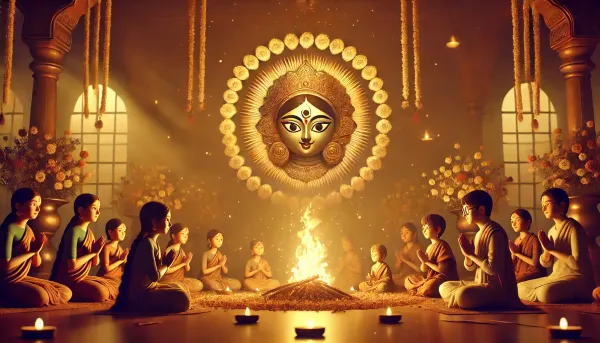
Observed on the eighth day of Navratri, Durga Ashtami is dedicated to the worship of Goddess Durga, the embodiment of strength, protection, compassion, and divine energy. It is regarded as a deeply auspicious day when devotion reaches a heightened intensity and seekers pray for courage, clarity, and the removal of inner negativity. Sacred rituals such as Durga Puja and Kanya Puja are performed with reverence, expressing both love for the Divine Mother and faith in her protecting grace.
In 2026, Durga Ashtami will once again be observed with devotion in homes and temples around the world. In this article, we will explore the auspicious timings for the day, the sacred rituals traditionally observed, and the deeper spiritual meaning behind the celebration. We will also reflect on its relevance for modern seekers and briefly look at the devotional celebrations at the Radha Krishna Temple in Dallas.
Durga Ashtami 2026: Date and Auspicious Timings
According to the traditional Hindu calendar and the calculations provided by Drik Panchang, Durga Ashtami during Chaitra Navratri will be observed on Thursday, March 26, 2026.
Durga Ashtami falls on the eighth day of the Navratri celebrations and is considered one of the most sacred days for the worship of the Divine Mother. Devotees observe the day with special prayers, fasting, and rituals, seeking the blessings of Goddess Durga for strength, protection, and spiritual growth.
Ashtami Tithi Timings
- Ashtami Tithi Begins: March 25, 2026 – 1:50 PM
- Ashtami Tithi Ends: March 26, 2026 – 11:48 AM
Since the Ashtami Tithi prevails during the morning hours on March 26, devotees will observe Durga Ashtami on March 26, 2026.
The observance of Durga Ashtami is marked by several sacred rituals performed with devotion throughout the day. These rituals reflect both reverence for the Divine Mother and the spiritual traditions associated with the festival.
Important Muhurats and Rituals on Durga Ashtami
The following rituals are traditionally observed on Durga Ashtami and hold deep devotional significance.
| Ritual / Muhurat | Significance | How It Is Observed |
|---|---|---|
| Durga Puja | Main worship of the Divine Mother on Durga Ashtami | Devotees offer flowers, incense, lamps, and prayers to Goddess Durga seeking protection, strength, and blessings. |
| Kanya Puja (Kumari Puja) | Worship of young girls as manifestations of the Divine Mother | Young girls are welcomed with reverence, their feet are washed, tilak is applied, and they are offered prasad such as halwa, puri, and chana. |
| Sandhi Puja | Sacred transition between Ashtami and Navami | Special prayers and offerings are performed during this powerful moment symbolizing the victory of the Divine Mother over evil. |
| Navratri Fasting (Vrat) | A devotional discipline observed during Navratri | Devotees observe fasting, follow a sattvic diet, and dedicate the day to prayer, chanting, and meditation. |
Celebrating Durga Ashtami at Home
While Durga Ashtami is celebrated grandly in temples and community gatherings, many devotees also observe the day with devotion in their homes. Simple rituals performed with sincerity can transform the home into a sacred space dedicated to the worship of the Divine Mother.

Common Household Observances on Durga Ashtami
- Morning purification and preparation
Devotees begin the day with a ritual bath and clean the prayer area. The altar is decorated with flowers, lamps, and an image or idol of Goddess Durga. - Durga Puja at the home altar
Offer flowers, incense, fruits, and lighted lamps while praying to the Divine Mother for protection, strength, and spiritual guidance. - Chanting of sacred hymns and mantras
Many devotees recite verses from the Devi Mahatmya, read the Durga chalisa or chant Durga mantras and devotional bhajans praising the Divine Mother. - Navratri fasting (Vrat)
Devotees observe a fast or follow a simple sattvic diet, dedicating the day to prayer, reflection, and spiritual discipline. - Kanya Puja (Kumari Puja)
Young girls are respectfully welcomed and worshipped as manifestations of the Divine Mother. Their feet are washed, tilak is applied, and they are offered prasad such as halwa, puri, and chana. - Evening Aarti and family prayer
Families gather in the evening to perform aarti before the image of the Goddess, offering lamps and singing devotional hymns. - Through these simple practices, devotees bring the spirit of Durga Ashtami into their homes, remembering that sincere devotion and reverence for the Divine Mother can transform everyday life into a sacred experience.
Spiritual Significance of Durga Ashtami
The festival of Navratri is often described as a sacred journey of inner purification and spiritual awakening. Over the course of nine days, devotees gradually turn their attention inward through prayer, fasting, and devotion to the Divine Mother. Each day represents a step in the seeker’s spiritual progress, guiding the mind away from negativity and toward clarity, strength, and devotion.
In this sense, the nine days of Navratri may be seen as a gradual spiritual ascent, guiding the seeker from discipline and purification toward the awakening of divine clarity that culminates on Durga Ashtami.
Within this spiritual journey, Durga Ashtami is regarded as a moment of culmination. By the eighth day, the discipline and devotion practiced during Navratri are believed to generate powerful spiritual energy. The day is associated with the worship of Mahagauri, whose radiant purity symbolizes the cleansing of the mind and the removal of inner darkness.
The sacred narrative describing the victory of Goddess Durga over the demon Mahishasura, found in the Markandeya Purana, illustrates this transformation in a powerful way. In its literal form, the story celebrates the appearance of the Divine Mother to restore cosmic balance by destroying the forces of evil that threatened the world.
Yet the story also carries a deeper symbolic meaning. Mahishasura represents the darker tendencies that often arise within the human mind, ego, pride, ignorance, anger, and destructive impulses. The battle between the Goddess and the demon therefore mirrors the inner struggle faced by every seeker.
Through devotion and spiritual discipline, these negative tendencies can gradually be overcome, allowing the higher qualities of wisdom, humility, and compassion to emerge.
This understanding has also been reflected in the teachings of great spiritual masters. The revered philosopher Adi Shankaracharya, known for his profound exposition of Vedantic philosophy, was also deeply devoted to the Divine Mother. Through hymns such as the Mahishasura Mardini Stotram and the Saundarya Lahari, he expressed the realization that the Divine Mother represents the supreme cosmic energy, Shakti, the power that sustains creation itself.
Durga Ashtami therefore becomes more than a ritual observance. It is a spiritual reminder that the victory of light over darkness begins within the human heart. By invoking the grace of the Divine Mother, devotees seek the strength to purify the mind, overcome ego and negativity, and awaken the divine potential that lies within.
Swami Mukundananda’s Insights on Durga Ashtami for Modern Seekers

In his discourses on Navratri, Swami Mukundananda often explains that the ancient narratives of the Divine Mother are not merely mythological stories but profound spiritual lessons about the human mind. According to him, the nine days of Navratri symbolize the gradual purification and elevation of consciousness. Each day represents a step in overcoming the inner weaknesses that cloud the mind and prevent the seeker from experiencing true spiritual fulfillment.
Swamiji emphasizes that the nine forms of the Divine Mother, collectively known as the Navadurga, can be understood symbolically as stages in the seeker’s inner journey. As devotees worship these forms during Navratri, they are reminded to cultivate qualities such as discipline, courage, purity, and devotion. Through sincere spiritual practice, the mind gradually becomes purified of negative tendencies such as ego, pride, anger, and ignorance.
The Nine Forms of the Divine Mother in Navratri
| Day | Form of the Goddess | Symbolic Spiritual Meaning |
|---|---|---|
| Day 1 | Shailaputri | Beginning of the spiritual journey and grounding in faith |
| Day 2 | Brahmacharini | Discipline, austerity, and dedication to spiritual practice |
| Day 3 | Chandraghanta | Courage and the awakening of inner strength |
| Day 4 | Kushmanda | Creative energy and the expansion of divine power |
| Day 5 | Skandamata | Compassion, nurturing, and protection |
| Day 6 | Katyayani | Determination and the destruction of negativity |
| Day 7 | Kalaratri | Courage to confront darkness and remove fear |
| Day 8 | Mahagauri | Purification of the mind and spiritual clarity |
| Day 9 | Siddhidatri | Spiritual fulfillment and divine grace |
Within this spiritual progression, Durga Ashtami holds special importance. The worship of Mahagauri represents the purification of the mind and the awakening of inner clarity. By this stage of the Navratri journey, the seeker is encouraged to move beyond the turbulence of the ego and experience the calm strength that arises from spiritual discipline and devotion.
Swamiji often reminds seekers that the true purpose of these sacred observances is not merely ritual celebration but inner transformation. When the symbolism of Navratri is understood in this way, the festival becomes a powerful guide for spiritual growth, inviting individuals to purify their thoughts, overcome their inner struggles, and awaken the divine potential that lies within.

The sacred atmosphere of Navratri comes alive with great devotion at the Radha Krishna Temple of Dallas, founded by Swami Mukundananda. During these nine days, the temple becomes a vibrant center of prayer, devotion, and community participation as devotees gather to worship the Divine Mother.
On Durga Ashtami, the celebrations hold special significance. The temple is beautifully decorated with flowers and traditional adornments, creating a serene and uplifting devotional environment. Devotees arrive throughout the day to offer prayers and participate in the special worship of Goddess Durga.
The observances typically include Durga Puja, devotional chanting, and collective prayers offered before the altar of the Divine Mother. The rhythmic sound of bells, the fragrance of incense, and the chanting of sacred mantras fill the temple hall, creating an atmosphere of deep reverence.
A particularly meaningful ritual performed on this day is Kanya Puja, in which young girls are worshipped as manifestations of the Divine Mother. Devotees respectfully welcome the girls, offer prayers, and serve traditional prasad. This beautiful tradition reflects the reverence for the divine feminine that lies at the heart of Navratri worship.
Families, children, and volunteers participate actively in these celebrations, making the occasion not only a spiritual observance but also a joyful community gathering. Through such collective devotion, the Radha Krishna Temple offers devotees an opportunity to experience the deeper spirit of Navratri, where ancient tradition, spiritual reflection, and community harmony come together in celebration of the Divine Mother.
Conclusion
Watch this video:Swami Mukundananda explains how desires multiply endlessly in the human mind, much like the demon Raktabeej in the Devi narrative.
The celebration of Durga Ashtami during Navratri is far more than a traditional festival. Through sacred rituals, prayers, and devotional practices, devotees seek the blessings of Goddess Durga, invoking her divine strength to guide them toward spiritual growth and inner clarity.
The stories associated with the Divine Mother remind us that the real battle between good and evil is not merely external but also takes place within the human mind. Qualities such as ego, pride, anger, and ignorance often cloud our judgment and disturb our inner peace. The victory of the Divine Mother over these forces symbolizes the possibility of overcoming these tendencies through devotion, discipline, and self-awareness.
Spiritual teachers such as Swami Mukundananda often explain this message through the symbolism of the Devi narratives. In the story of the demon Raktabeej, every drop of the demon’s blood produced another demon. Swamiji beautifully interprets this as a reflection of human desires, when one desire is fulfilled, many more arise in its place. In this way, the mind can remain trapped in an endless cycle of cravings and dissatisfaction.
The teachings of Navratri therefore invite seekers to move beyond this cycle by purifying the mind and cultivating higher spiritual qualities. Through the worship of the Divine Mother and the discipline of spiritual practice, devotees gradually learn to overcome inner negativity and awaken the divine strength that resides within.
Whether observed through traditional rituals at home or through collective celebrations at places such as the Radha Krishna Temple of Dallas, Durga Ashtami continues to inspire seekers across the world. It reminds us that when the mind becomes purified and the heart filled with devotion, the light of divine energy inevitably triumphs over the darkness of ignorance.
In this spirit, Durga Ashtami becomes not only a sacred celebration but also an invitation, to cultivate inner strength, embrace spiritual wisdom, and walk the path of transformation guided by the grace of the Divine Mother.
When the mind is purified and the heart filled with devotion, the Divine Mother’s grace awakens the strength within us to overcome every darkness.
Key Takeaways
- Durga Ashtami, observed on the eighth day of Navratri, is one of the most sacred days dedicated to the worship of the Divine Mother.
- The day symbolizes the triumph of divine power over negativity, represented in the story of Goddess Durga defeating Mahishasura.
- The nine days of Navratri represent a gradual process of inner purification and spiritual growth.
- According to Swami Mukundananda, the nine forms of the Divine Mother symbolize stages in the seeker’s spiritual journey toward clarity and inner strength.
- Durga Ashtami, associated with the form Mahagauri, represents the purification of the mind and the awakening of inner spiritual clarity.
- Devotional practices such as Durga Puja, Kanya Puja, Sandhi Puja, and Navratri fasting help devotees cultivate discipline, humility, and devotion.
- Celebrations at the Radha Krishna Temple of Dallas beautifully bring together tradition, devotion, and community participation.
Call to Reflection
Durga Ashtami offers every seeker an opportunity to pause and reflect on the deeper purpose of life. Beyond the rituals and celebrations, it reminds us that true transformation begins within.
As spiritual teacher Swami Mukundananda often emphasizes, spiritual wisdom becomes meaningful only when it is practiced in daily life. By cultivating devotion, self-discipline, and inner awareness, each of us can gradually overcome negativity and awaken the divine strength that lies within.
May the blessings of the Divine Mother inspire us to walk the path of wisdom, compassion, and inner transformation.
Frequently Asked Questions
1. When is Durga Ashtami in 2026?
Durga Ashtami during Chaitra Navratri will be observed on Thursday, March 26, 2026, according to calculations from Drik Panchang.
2. Why is Durga Ashtami important?
Durga Ashtami marks the worship of Goddess Durga and symbolizes the victory of divine power over negativity and evil forces.
3. What rituals are performed on Durga Ashtami?
Important rituals include Durga Puja, Kanya Puja, Sandhi Puja, and Navratri fasting, all performed with devotion and reverence for the Divine Mother.
4. What is the significance of Kanya Puja?
Kanya Puja involves worshipping young girls as manifestations of the Divine Mother, symbolizing respect for the divine feminine and purity.
5. What does Durga Ashtami represent spiritually?
Spiritually, Durga Ashtami represents the purification of the mind and the awakening of inner strength, symbolized by the form Mahagauri.
6. Why are the nine forms of Durga worshipped during Navratri?
The nine forms of the Divine Mother represent stages in the seeker’s spiritual journey, guiding devotees toward inner purification and spiritual fulfillment.
References
- Teachings and discourses of Swami Mukundananda on Navratri symbolism