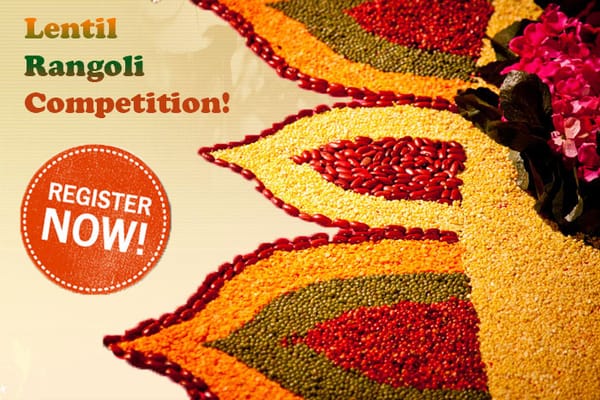
✨ A Celebration of Colors & Creativity ✨
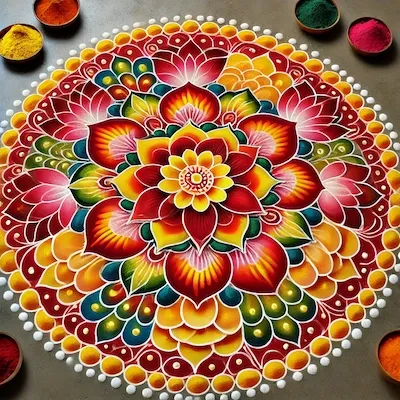
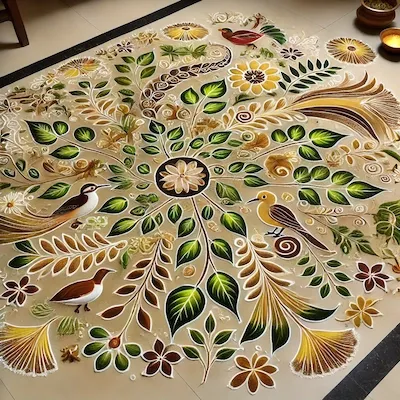
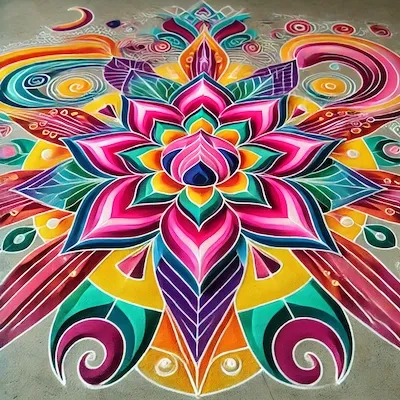
From florals to modern masterpieces — check out these stunning rangoli designs below and let the inspiration flow.
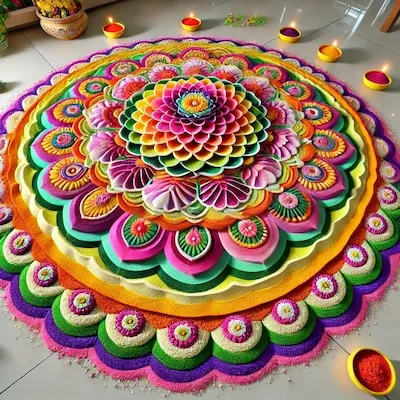
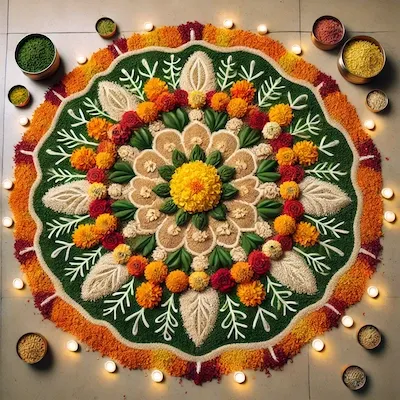
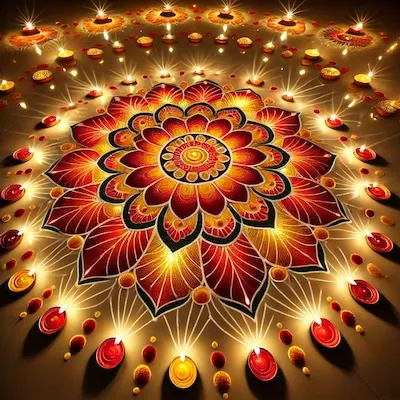
A Burst of Color on Diwali Morning

It was the morning of Diwali 2025, and the streets of Jaipur glowed under the rising sun. Little Anaya clutched a handful of colored powders, her small fingers trembling with excitement. “Amma, can I make the biggest rangoli this year?” she asked. Her mother smiled, recalling her own childhood, when she used to kneel on the floor, carefully outlining petals and patterns. Today, they would mix tradition with a modern twist—geometric shapes, glitter, and even eco-friendly LED lights. As Anaya pressed the first stroke of vibrant orange, she realized that rangoli was not just decoration; it was a story painted on the floor, a ritual of joy, and a canvas of creativity.

The Magic of Rangoli
Rangoli is more than just an art form—it’s a symbol of welcome, prosperity, and celebration. For centuries, families across India have decorated thresholds with intricate designs, believing that it invites Goddess Lakshmi into their homes. Each color, each motif, carries meaning: red for love, yellow for sanctity, green for fertility, and white for peace.
Yet, beyond symbolism, rangoli is a medium for personal expression. Swirls, flowers, geometric patterns, and even abstract designs reflect the personality and mood of the creator. In 2025, rangoli has evolved to blend tradition with modernity, merging natural powders with sustainable materials and classic motifs with contemporary styles.
Traditional Rangoli Designs
Traditional rangoli designs are rooted in Indian culture. Here are a few ideas that continue to inspire families today:
1. Floral Patterns
Floral motifs are timeless. Lotus, marigold, and hibiscus shapes are commonly drawn, symbolizing purity, devotion, and joy. You can create concentric circles of petals using red, yellow, and white powders, and add small dots in contrasting colors for detailing.
How to Create It:
- Draw a large circle using chalk or a plate as a guide.
- Outline lotus or marigold petals around it using white chalk.
- Fill petals with red, orange, and yellow powders.
- Add green accents for leaves between petals.
- Finish with white dots or rice flour outlines for contrast.
💡 Tip: Layer flower petals (marigold, rose, jasmine) on top for a natural texture.
2. Geometric Patterns
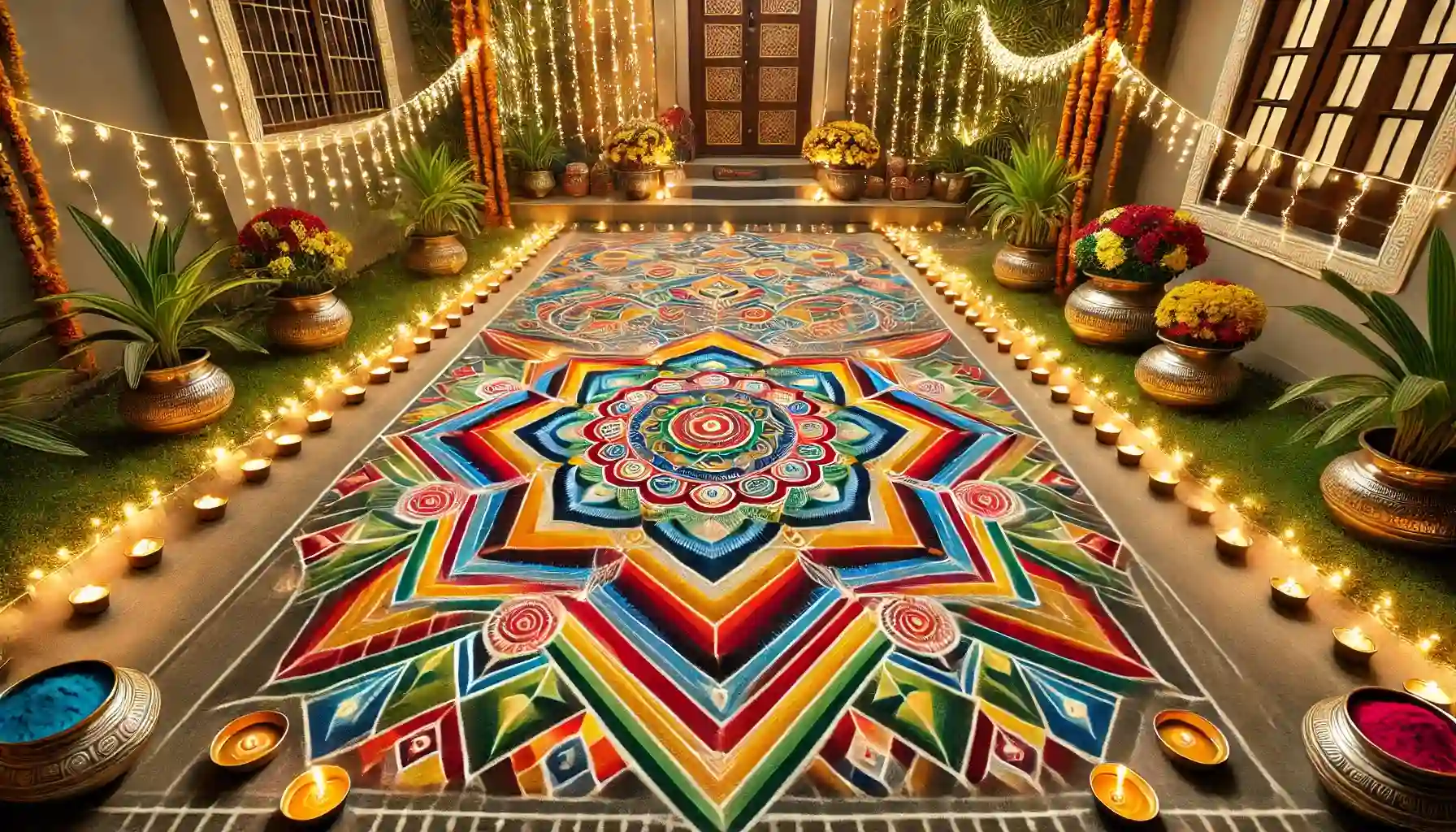
Classic rangoli often features symmetrical geometric patterns such as squares, triangles, and circles. Mandala-style rangoli, with its radial symmetry, not only looks beautiful but also brings a sense of balance and harmony to the home.
How to Create It:
- Lightly sketch a grid with chalk — squares or triangles work well.
- Choose a central point and work outward in balanced shapes.
- Alternate colors (red, blue, white) for depth and harmony.
- Use a sieve or funnel for clean edges.
- Highlight the borders with rice flour or glitter.
💡 Tip: Mandala-style circles make this pattern look elegant and complete.
3. Diya Motifs
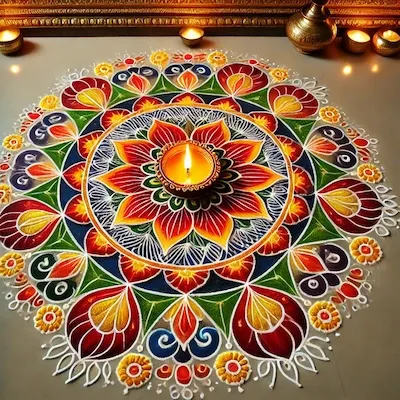
A central diya design surrounded by floral or geometric patterns is traditional yet impactful. It represents the triumph of light over darkness and adds a spiritual touch to your rangoli.
How to Create It:
- Mark a small circle at the center — this will hold your diya.
- Draw flame shapes radiating outward.
- Use bright colors like yellow, orange, and red near the flame.
- Surround the diya with circular or floral borders.
- Place a real diya or LED lamp in the middle once complete.
💡 Tip: Add white powder highlights around the flame for a glowing effect.
4. Nature-inspired Designs
Leaves, vines, birds, and even tiny animals are traditional themes. These designs connect the celebration with nature, emphasizing harmony and abundance.
How to Create It:
- Sketch vines or leaf shapes flowing across the floor.
- Fill leaves with green and add veins using darker shades.
- Add small birds, butterflies, or floral motifs in between.
- Use flower petals or rice grains for a natural finish.
💡 Tip: Keep edges soft — it mimics nature’s organic flow.
Modern Rangoli Ideas for Diwali 2025
Modern rangoli allows creativity to merge with innovation. Young families and millennials are experimenting with materials, textures, and techniques that make their designs pop.
1. Fusion Rangoli
Blend traditional motifs with modern art. Imagine a lotus outlined with bright geometric triangles or a diya in the center with a swirl of abstract patterns around it. Fusion rangoli can be colorful, bold, and unique.
How to Create It:
- Start with a traditional motif like a lotus or diya.
- Outline with white chalk, then surround it with abstract triangles or spirals.
- Mix traditional powders with metallic glitter or beads.
- Add LED lights around the outer ring for a modern glow.
💡 Tip: Choose 3-4 bright contrasting colors for a bold look.
2. 3D Rangoli
Using layers of colored powders, flower petals, or colored rice, you can give your rangoli a three-dimensional effect. 3D rangoli designs create shadows and depth, making the artwork more dynamic and eye-catching.
How to Create It:
- Begin with a simple circular or floral outline.
- Use darker shades at the center and lighter shades outward for depth.
- Add layers of petals or geometric borders in different colors.
- Sprinkle flower petals or sand at raised edges for texture.
💡 Tip: Shadows are key — blend colors gradually for a 3D illusion.
3. Eco-Friendly Rangoli
Sustainability is a trend for 2025. Use organic powders, flower petals, and rice flour. You can even incorporate reusable LED lights or biodegradable glitters to make the designs shimmer while being environmentally conscious.
How to Create It:
- Use rice flour, turmeric, and beetroot or spinach powder as natural colors.
- Replace synthetic glitter with crushed shells or biodegradable shimmer.
- Decorate edges with marigold or rose petals.
- Add reusable diyas or solar LEDs for light.
💡 Tip: Dry flowers and grains make it both sustainable and colorful.
4. Minimalist Rangoli
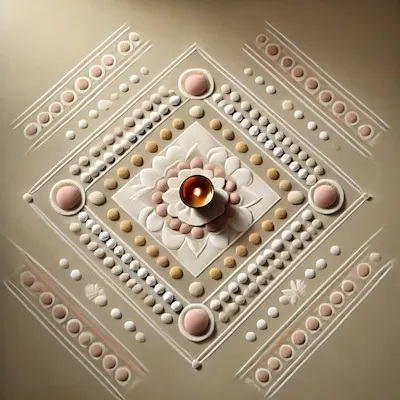
Sometimes, less is more. Minimalist rangoli uses fewer colors and simpler designs but emphasizes symmetry and elegance. A single geometric motif or a tiny diya surrounded by dots can be visually striking.
How to Create It:
- Choose a small, clean space like the entrance or near a diya.
- Lightly draw one simple motif — a circle, lotus, or mandala outline.
- Use only 2–3 soft colors (white, gold, and one accent shade like red or turquoise).
- Add tiny dots or a single diya at the center for focus.
- Keep plenty of empty space around the design — that’s part of the art.
💡 Tip: Rice flour or white chalk powder on plain flooring looks effortlessly elegant.
5. Rangoli with Lights
Incorporating tealights, candles, or small LED lamps adds a luminous dimension. Arrange them along patterns or in rows of dots to accentuate traditional designs, merging art with illumination.
How to Create It:
- Draw your design first — circular or floral patterns work best.
- Use colors that reflect light well (gold, white, yellow).
- Place tealights or LED candles along the borders.
- Make sure lights are evenly spaced for a balanced glow.
💡 Tip: Use transparent glass bowls for lamps to add sparkle.
🪔 Quick Rangoli Starter Kit
- Chalk or white pencil for outlines
- Colored powders (or natural alternatives)
- Sieve or funnel for fine designs
- Petals, rice, or sand for texture
- Diyas or LED lights for final glow
Story: The Neighborhood Rangoli Challenge
Anaya’s school organized a Diwali rangoli competition for 2025. This year, her parents suggested she create a fusion design inspired by both tradition and innovation. They sketched a giant lotus at the center and surrounded it with rainbow-colored geometric patterns, adding small LED lights along the edges.
Across the street, the Sharma family prepared a minimalist rangoli, a simple circle of marigold petals with a single diya in the center. Each home had its unique expression, yet the entire neighborhood felt connected through the shared act of creation.
When the festival began, children and adults gathered to admire each design. The combination of colors, patterns, and lights turned the street into a living gallery. The traditional and modern rangoli stood side by side, reflecting the essence of Diwali 2025—a celebration of heritage and creativity.
Tips for Creating Stunning Rangoli
- Plan Your Design: Sketch lightly with chalk before filling in colors.
- Choose a Color Palette: Complementary colors enhance visual appeal.
- Use Tools: Small cones, sieves, or stencils help maintain precision.
- Incorporate Textures: Use flower petals, rice, sand, or glitter for depth.
- Add Lighting: Small lamps or candles make your rangoli glow in the evening.
- Practice Symmetry: Even small misalignments can affect overall balance.
- Invite Family Participation: Rangoli is a joyful, collaborative activity.
The Symbolism Behind Colors and Shapes
Colors in rangoli are not arbitrary; each hue carries energy:
- Red: Energy, strength, and love
- Yellow: Prosperity, wisdom, and positivity
- Green: Nature, growth, and harmony
- White: Peace, purity, and spirituality
Shapes, too, are meaningful:
- Circles: Eternity and unity
- Squares: Earthly balance
- Triangles: Fire, energy, and transformation
- Flowers and Leaves: Nature, fertility, and abundance
By combining colors and shapes thoughtfully, your rangoli can become a spiritual as well as visual celebration.
Creating Rangoli with Children

Rangoli is a perfect way to involve children in Diwali preparations. Children learn patience, coordination, and cultural values while expressing themselves creatively. For 2025, try:
- Finger Painting Rangoli: Children can use their hands to create petals, leaves, and dots.
- Stencil Rangoli: Easier for younger kids, stencils allow them to practice symmetry.
- Glow-in-the-Dark Rangoli: Mix phosphorescent powders with traditional colors for a magical effect at night.
Through this shared activity, children not only enjoy the festival but also carry forward the tradition.
Rangoli Across India: Regional Styles
India’s diversity is reflected in its rangoli traditions:
1. Kolam (Tamil Nadu)
Made with rice flour, kolams are often simple yet intricate. Patterns are geometric and usually symmetrical, meant to invite prosperity.
2. Alpana (Bengal)

White chalk or rice paste designs adorn floors, often depicting deities, flowers, and geometric patterns.
3. Mandana (Rajasthan & Madhya Pradesh)
Bold, colorful designs using chalk and natural powders, sometimes combined with grains and flowers.
4. Rangoli (Maharashtra)
Bright, colorful designs often use multiple colors to fill floral and geometric patterns.
Exploring regional styles offers inspiration for blending traditional and modern designs.
5 Muggu (Andhra Pradesh)
In Andhra Pradesh, rangoli is known as Muggu. These designs are made using white chalk or rice flour and are drawn during festivals and auspicious occasions. Muggulu, a variant of Muggu, is a popular form of rangoli in the region.
6 Mandana (Rajasthan)
Mandana is a traditional wall painting art form practiced in Rajasthan. It involves creating geometric patterns and motifs using white lime paste on red ochre walls. Mandana designs are often associated with auspicious occasions and are believed to bring good fortune.
DIY Rangoli Hacks for 2025
- Colored Sand Art: Replace powder with sand for texture and stability.
- Flower Petal Layers: Use petals of different shades to create gradients.
- Edible Rangoli: Use rice flour, turmeric, and beetroot powder for a natural, safe option.
- Stencil Prints: Print intricate designs for consistent patterns every year.
- Glow Effects: Tiny battery-operated LEDs or glow sticks can add a magical sparkle.
These hacks save time, reduce mess, and allow you to explore creativity freely.
Making Rangoli Eco-Friendly
Sustainability is a growing trend for 2025 Diwali celebrations:
- Avoid synthetic colors: Use natural powders, turmeric, rice flour, or flower petals.
- Reuse materials: Glass beads, pebbles, or shells can be incorporated year after year.
- Minimal water use: Opt for dry designs when using powders and petals.
- LED lights: Replace candles or firecrackers to reduce pollution.
Eco-friendly rangoli preserves both tradition and the environment, ensuring Diwali’s joy doesn’t harm the planet.
Rangoli as Meditation
Creating rangoli can be a meditative practice:
- Focus on symmetry and repetition of patterns.
- Watch colors blend as you fill in designs.
- Let the process calm the mind.
Swami Mukundananda often emphasizes mindfulness in rituals; rangoli is one such ritual where art and devotion merge. The repetitive, careful act of creating patterns fosters inner peace, aligning beautifully with the spiritual essence of Diwali.
Story: Grandma’s Secret Technique

In Anaya’s family, Grandma revealed a secret: before starting, she would close her eyes, visualize the design in her mind, and then slowly transfer it onto the floor. She said, “The best rangoli flows from the heart, not the hand.”
This year, Anaya tried it. She closed her eyes, imagined a lotus surrounded by shimmering geometric swirls, and when she opened her eyes, the design almost drew itself. Grandma’s words echoed: “Rangoli is more than decoration—it’s devotion, joy, and intention made visible.”
Tips to Keep Your Rangoli Long-Lasting
- Base Layer: Smooth the floor before placing powders.
- Fixatives: Lightly mist with water for stability.
- Avoid Drafts: Create in sheltered spaces to prevent wind disruption.
- Layering: Start with large shapes, then add details on top.
- Lighting: Place lamps or candles around edges to enhance visibility and preserve colors.
Following these tips ensures your rangoli remains vibrant throughout Diwali celebrations.
Final Thoughts: Rangoli as Celebration
Rangoli in 2025 embodies a fusion of tradition, innovation, and sustainability. Whether you choose a classical floral motif, a minimalist design, or a glowing 3D masterpiece, the essence remains: it’s a symbol of joy, welcome, and spiritual expression.
Every stroke, every color, every dot is a prayer for prosperity, happiness, and harmony. Rangoli transcends decoration; it is a bridge between generations, a canvas for creativity, and a celebration of life itself.
This Diwali, try traditional patterns with a modern twist, involve family and friends, and embrace eco-friendly materials. Let your creativity shine, and remember: the most beautiful rangoli is not just the one that dazzles the eyes, but the one that illuminates the heart.
🎨 Explore More Rangoli Inspirations for Diwali 2025 & Chhath Pooja Blog
Discover vibrant rangoli ideas blending tradition and innovation. Whether you love floral motifs, geometric patterns, or eco-friendly designs, these detailed guides on our partner blogs will spark your creativity this festive season!
🌟 Chhath Puja 2025: All about the 4-day festival, fasting rituals, sunrise and sunset timings 🌺 Read the JKYog Rangoli Design Guide → 💖 Navratri 2025 Guide📣 Final Call to Action
🕯️ This Diwali, don’t just scroll through content — transform through it.
✨ 👉 Subscribe to Swami Mukundananda’s YouTube Channel
Join thousands in accessing the Gita wisdom, mind management, bhakti yoga, and transformational guidance that can light your entire year.
🎉 Join a Larger Celebration — Community Diwali 2025
✨ "Spirituality blossoms in community." — Swamiji
After your home celebrations, consider joining a temple or satsang-based Diwali to experience the true essence
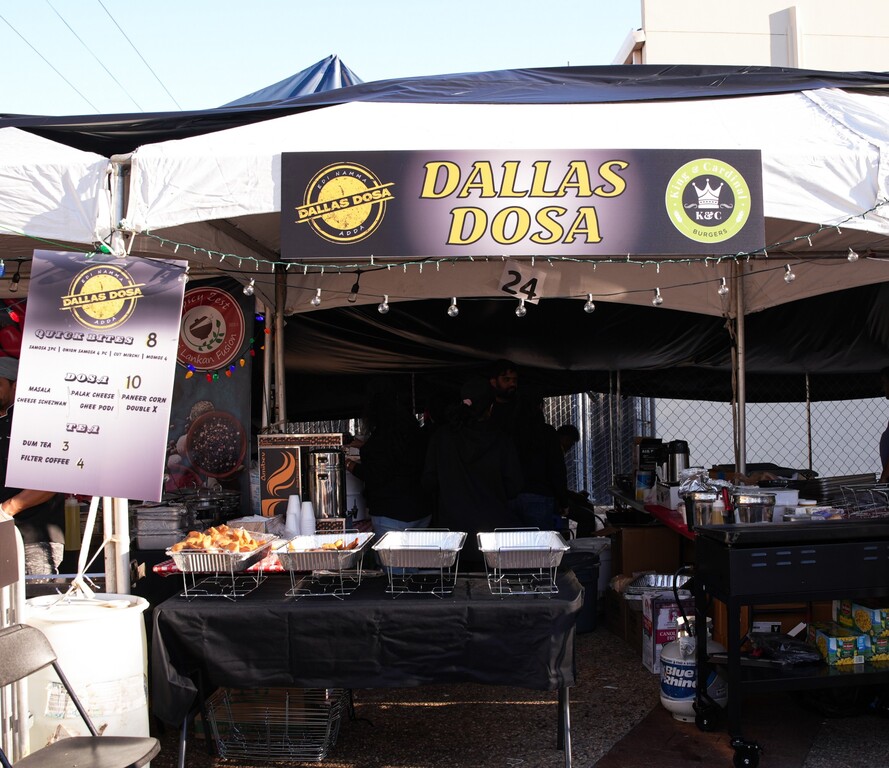
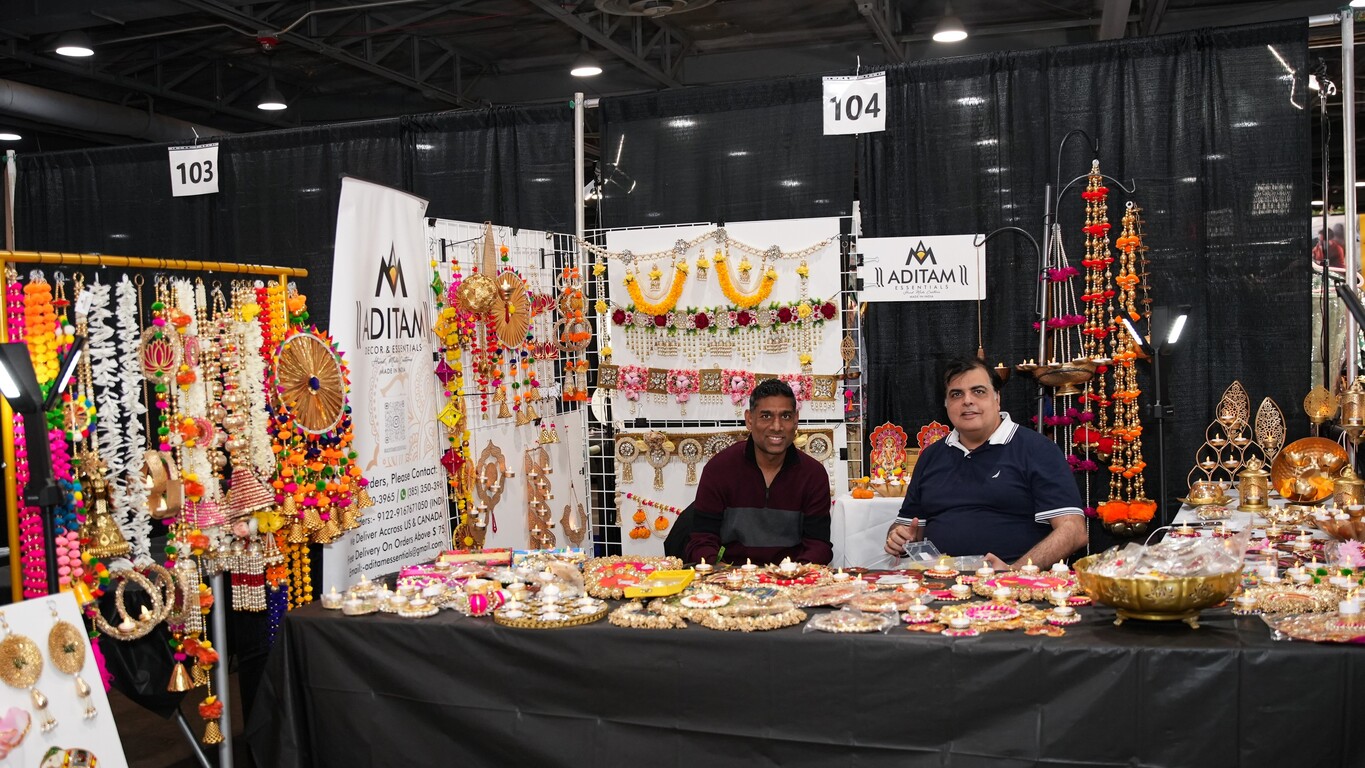
🛕 We Recommend: The Grand Diwali 2025 Festival at the Radha Krishna Temple of Dallas
📍 Allen, Texas
📅 October 18–23, 2025
🎉 Event Website →
This year’s events include:
- Lakshmi Puja & Annakut
- Cultural performances
- Youth activities
- Govardhan Leela
- Grand Aarti & Fireworks
- Delicious vegetarian prasadam
💖 "Bring your family not just to witness tradition, but to become part of something timeless."
Diwali Mahotsav 2025 at Radha Krishna Temple of Dallas
A Celebration of Lights, Devotion & Festivities
October 17–21, 2025
Special Events: 24-Hour Akhand Ramayan Paath (Oct 11) | Govardhan Pooja (Oct 21)

💡 Click to light a diya
“Diwali is not just about external lights, but about lighting the lamp of knowledge within our hearts.”
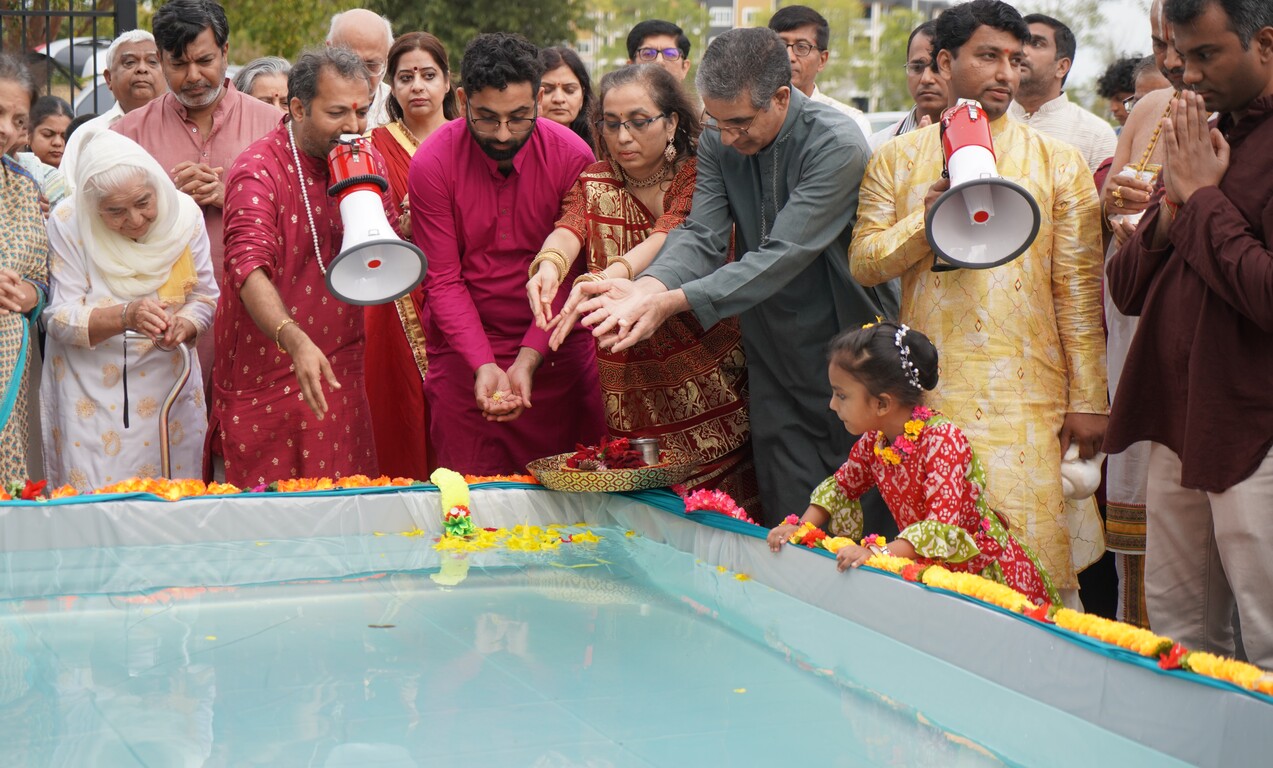
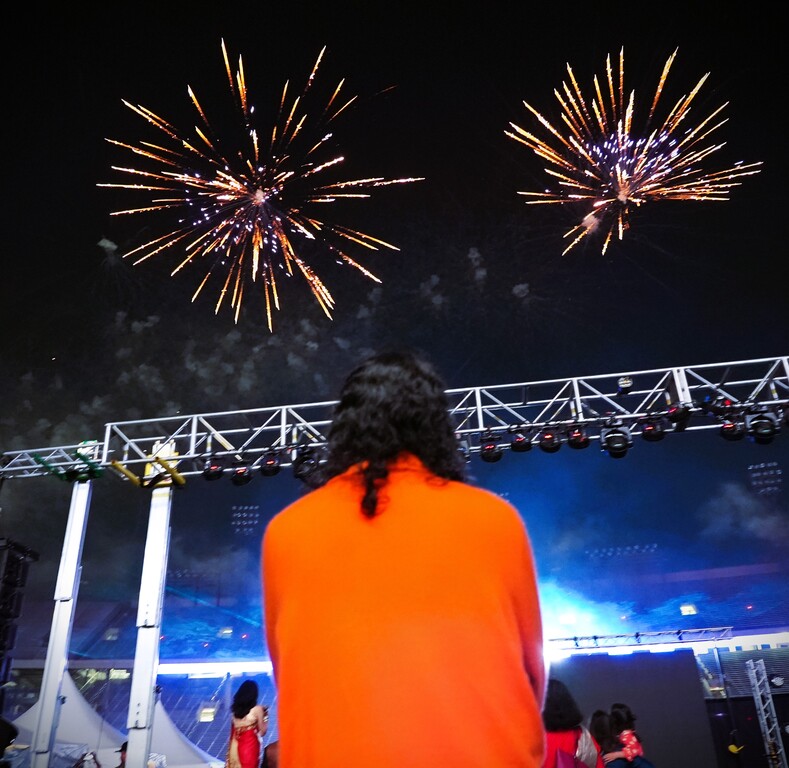
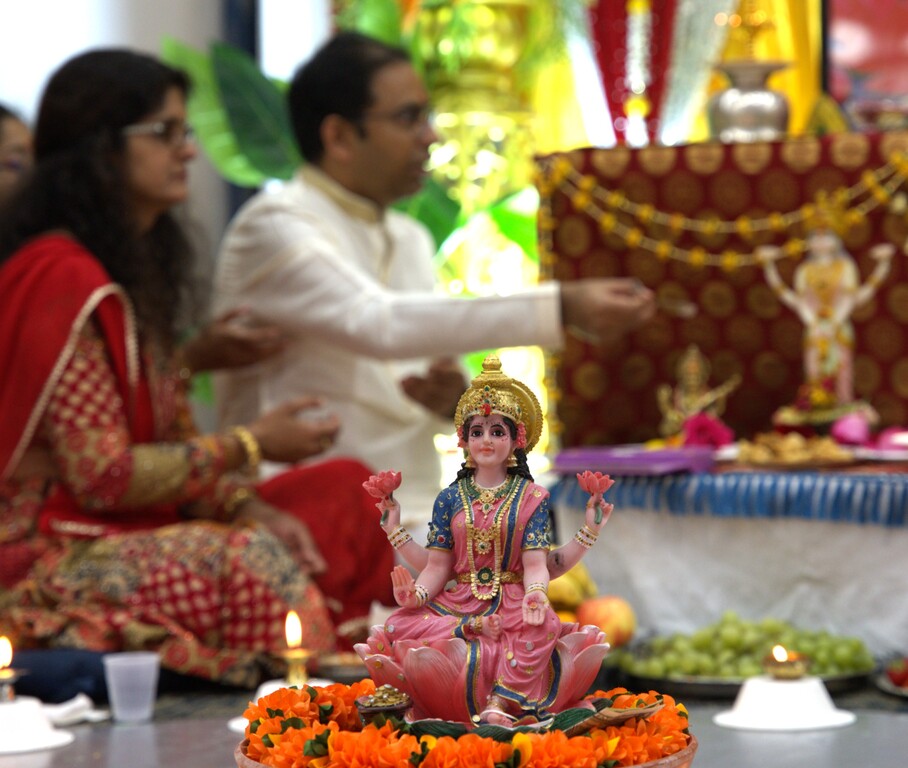

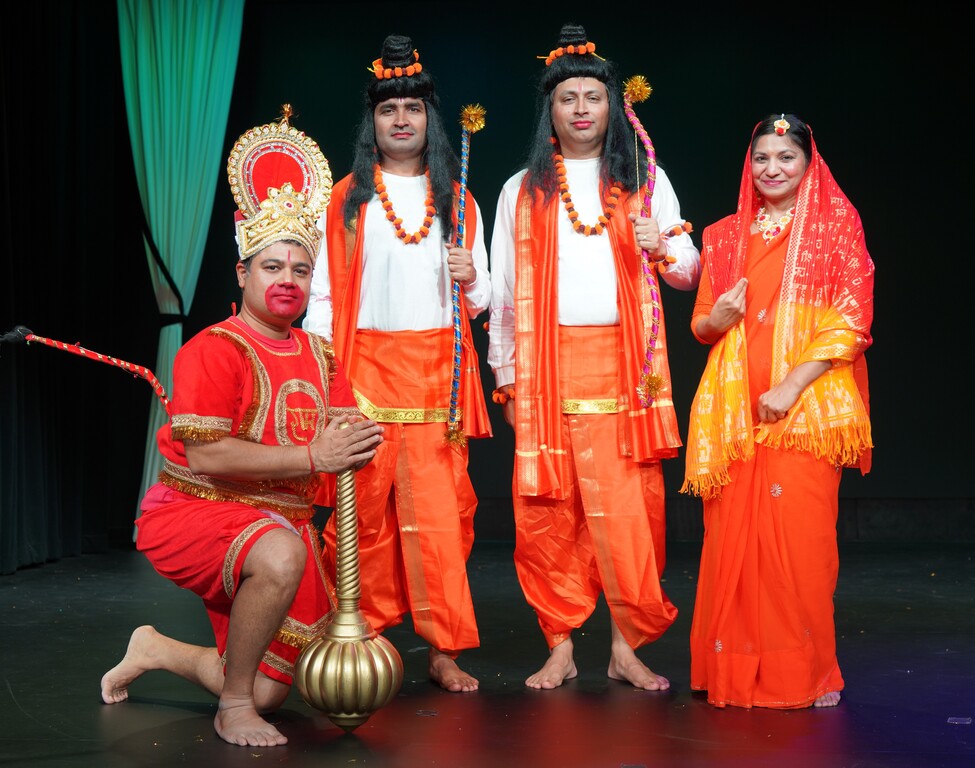
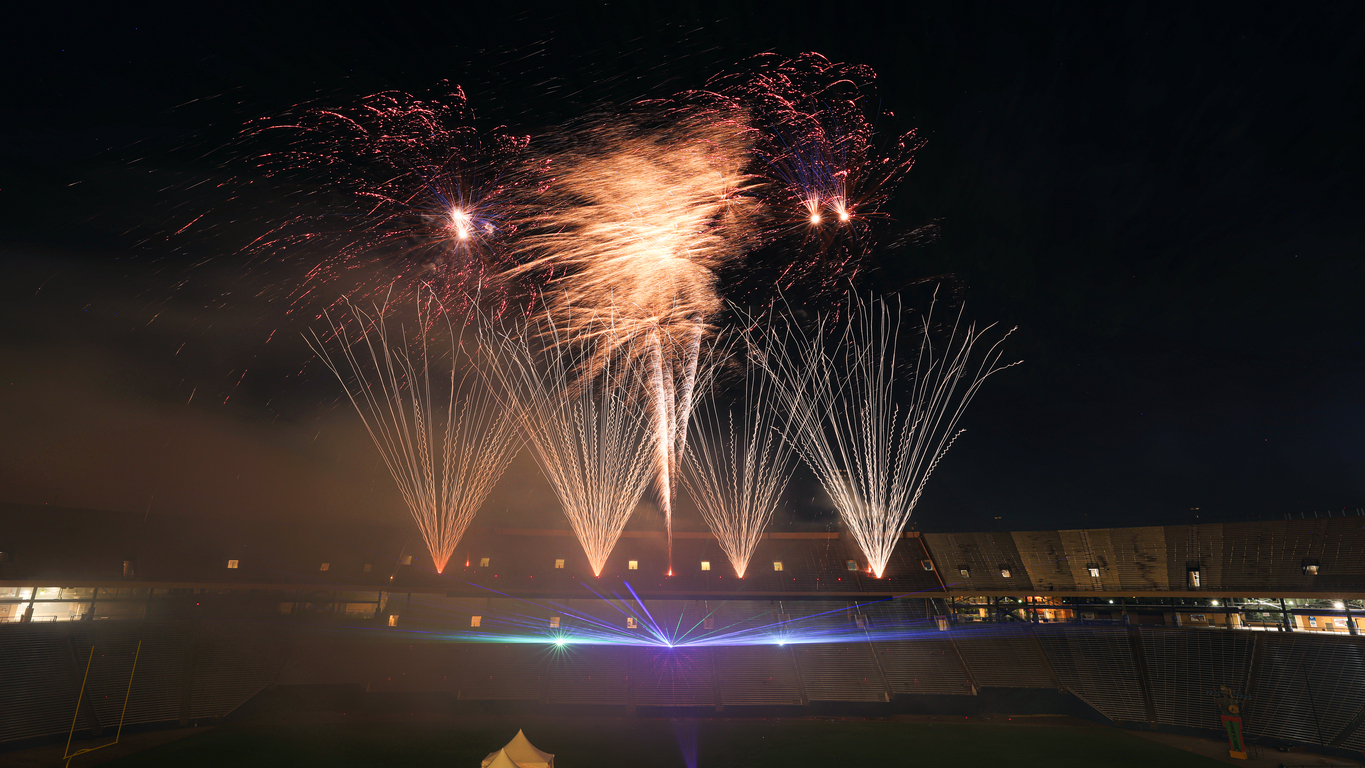
🚫 No outside fireworks allowed. Only authorized fireworks are permitted.
FAQs
1. What is the significance of Rangoli in Diwali celebrations?
Rangoli is a traditional floor art that symbolizes welcome, prosperity, and happiness. It’s believed to invite Goddess Lakshmi into homes and represents joy, creativity, and devotion during Diwali.
2. What are the traditional Rangoli designs for Diwali?
Traditional designs include floral patterns, geometric shapes, mandalas, diya motifs, and nature-inspired themes. Each pattern carries symbolic meaning, such as red for love and yellow for prosperity.
3. How can I create modern Rangoli for 2025?
Modern Rangoli can incorporate fusion designs, 3D effects, minimalism, LED lights, and eco-friendly materials. Combining tradition with innovation makes the artwork vibrant and contemporary.
4. Are there regional variations of Rangoli across India?
Yes! For example, Kolam in Tamil Nadu, Muggu in Andhra Pradesh, Alpana in West Bengal, Mandana in Rajasthan, Pookalam in Kerala, and Aripana in Bihar each have unique styles, materials, and cultural significance.
5. Can Rangoli be made eco-friendly?
Absolutely! Use natural powders, rice flour, flower petals, biodegradable glitters, and LED lights instead of candles or synthetic colors to create beautiful, sustainable Rangoli designs.
References
- Truly Tribal. The Art of Rangoli: Traditions & Significance. Published 27 Oct. 2021.
- eCraftIndia. Rangoli: Meaning, History, Significance & Reason Behind Making Colorful Designs.Published 24 Aug. 2022.
- Soulart Paintings & Handicrafts. Regional Rangolis. Accessed 8 Oct. 2025.
- Rahul Rangoli. Traditional Rangoli Designs: Top 5 Patterns & Meanings.