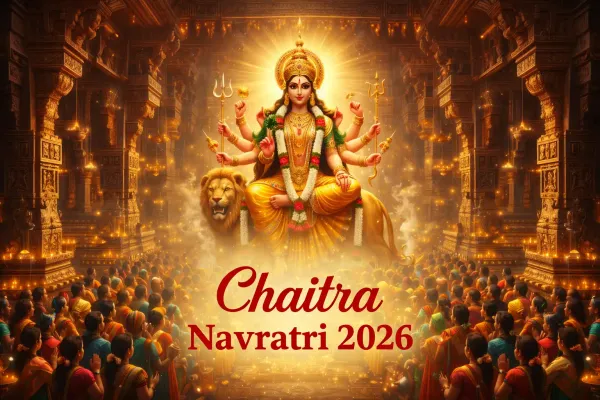
Chaitra Navratri 2026: The Journey from the Palanquin to the Elephant
March 19–27, 2026 | Vikram Samvat 2083
Most of us spend our lives waiting for the right moment to change.
Waiting until things settle down. Until the mind quiets on its own. Until life feels stable enough to focus on what truly matters. But the mind doesn't settle by waiting. It settles by practice: deliberate, repeated, and rooted in devotion.
Chaitra Navratri is that practice, handed down across millennia. Nine days. Nine forms of the Divine Mother. Nine precise interventions on the restless human mind.
This year, it begins on March 19, 2026, the very same morning that the Hindu New Year, Vikram Samvat 2083, dawns. That convergence alone makes this Navratri significant. But 2026 carries something rarer still.
Astrologers note that this year's opening carries a celestial alignment that is believed to be a rare alignment: a confluence of Amavasya timing, sunrise, and the start of the new Vikram Samvat all meeting within the same sacred morning. Ancient, and unlikely to repeat in our lifetimes.
This is not a year to observe Navratri on autopilot.

The Goddess Durga arrives this year in a Palanquin (Palki) and departs nine days later on an Elephant. Between these two images lies the entire spiritual arc of 2026, and a direct invitation to anyone willing to make the journey from inner turbulence to grounded grace.
Whether you are a lifelong devotee or encountering these traditions for the first time, what follows is a practical and deeply rooted guide to these nine nights, grounded in the teachings of Swami Mukundananda ji, whose life's work centers on one truth: the mind is the seat of all our suffering and all our freedom. Not circumstances. Not other people. The mind.
These nine nights are, at their core, nine nights of mind management. The Mother is the guide. The festival is the method.
Why This Navratri Carries a Specific Signature
Because Chaitra Navratri opens on a Thursday, the Goddess arrives in a Palki. In the Agama Shastras, the day of the week on which Navratri begins determines the Mother's vehicle, her Vahan, which in turn signals the spiritual theme for the entire year. Thursday belongs to Jupiter, Brihaspati, the Guru of the Devas, the principle of wisdom and elevation. The Hindu New Year (Vikram Samvat 2083) therefore begins under the Guru's influence: a year that rewards those willing to learn, be guided, and surrender something of the ego in exchange for something real.
Because the festival closes on a Friday (Ram Navami, March 27), the Goddess departs on an Elephant: Gaja, the ancient symbol of dignity, stability, and grounded abundance.
The arc is unmistakable. The year begins in transition and, for those who do the inner work, ends in stability. This is not metaphor for its own sake. It is a practical roadmap. And it begins with understanding what the Palanquin is really saying.
The Palanquin: What the Mother Is Telling Us

Picture a bride leaving her childhood home in a Palki. The image is bittersweet. She is moving toward something beautiful, but the movement itself involves trembling. The Palki sways. That is what a palanquin does.
This is the symbol the Mother has chosen for 2026.
She is not signaling disaster. She is signaling rearrangement. Old structures may loosen. Familiar certainties may shift. Plans may need revision. For many people, the beginning of this year has already felt that way.
In the Vedic framework, the Palki is carried by four bearers. Swami Mukundananda ji identifies four facets of the inner instrument: Manas (the receiving mind), Buddhi (the discerning intellect), Chitta (the deep subconscious), and Ahankar (the ego-sense). The Mother's question, encoded in the Palki symbol, is direct: Are these four faculties strong enough to carry the Divine? Or are they stumbling under the weight of your conditioning?
The swaying of the Palki is the mind not yet anchored in God.
This is precisely why Swamiji emphasizes Roopdhyan, the practice of lovingly resting your awareness on the divine form. Not forcing, not straining, but gently, repeatedly returning the mind to God the way you return a wandering child to your side. Over nine nights, this practice has the power to transform a swaying, anxious mind into something far steadier.
The Elephant at the end is not a reward handed to the deserving. It is the natural result of a mind that has been anchored, purified, and offered in devotion.
Ghatasthapana: Anchoring the Divine in Your Home
If these nine nights are a journey, Ghatasthapana (Kalash Sthapana) is the moment you plant your flag and say: I am doing this. I am beginning.
On the morning of March 19, between 6:52 AM and 7:43 AM IST, the primary window opens for establishing the Kalash, the sacred pot that will serve as the living center of your home for the next nine days. Those who miss this window have a secondary opportunity during the Abhijit Muhurat: 12:05 PM – 12:53 PM.
The Kalash is not merely a decorative object. In Vedic thought, it is a Brahmanda, a cosmic egg, a miniature universe. The clay vessel is the body; the water inside is the life-force; the mango leaves represent the five senses offered back to God; and the coconut at the crown symbolizes the ego, hard on the outside but containing something pure and sweet within.
Setting it up is an act of intention made physical.

What you need:
- A clay pot (soak overnight so it doesn't absorb the holy water)
- Fresh water, with a few drops of Ganga Jal if available
- Akshat (unbroken rice), Supari (betel nut), a coin, Durva grass
- Five mango leaves placed at the mouth of the pot
- A whole coconut wrapped in red cloth, placed on top
- Mauli (red thread) tied three times around the neck of the pot
Before filling it, draw a Swastika in kumkum on the vessel, invoking harmony from all four directions. As you do, hold your Sankalp clearly: What are you asking these nine nights to change in you?
Swami Mukundananda ji's reminder is worth holding here: "The heart matters more than the hardware." A perfect altar with a distracted mind is just decoration. A simple clay pot established with genuine surrender becomes a powerhouse of grace.
The Kalash is what you wish to become by Day 9: stable, full, upright, and open to the sky.
Key Timings for March 19:
|
Event |
Time (IST) |
|
Pratipada Tithi
Begins |
6:40 AM |
|
Ghatasthapana:
Primary Window |
6:52 AM – 7:43 AM |
|
Abhijit Muhurat:
Secondary Window |
12:05 PM – 12:53
PM |
|
Night Sadhana |
10:00 PM –
Midnight |
The Nine Days: A Map of the Inner Journey
What follows is not a ritual checklist. It is a psychological and spiritual progression, with each goddess removing a specific layer of inner obstruction, moving the devotee from grounded effort toward effortless grace.
Swamiji teaches that the mind must be addressed systematically. You cannot skip from anxiety to enlightenment. The nine forms of Durga are, in this sense, nine precise interventions.

Day 1: Maa Shailputri | March 19 | Yellow | Offer: Pure Ghee
The Lesson: Find your ground.
Daughter of the Mountain, she does not move. Before the mind can rise, it must first stop running. In the swaying Palki of 2026, Shailputri is the first steadying hand. Offer ghee to nourish the inner flame of faith, and spend this day asking: What am I truly standing on?
Day 2: Maa Brahmacharini | March 20 | Green | Offer: Sugar
The Lesson: Discipline is devotion in action.
She walked barefoot. She ate leaves. She meditated for thousands of years. Her teaching is not about punishment. It is about the sweetness that discipline eventually produces. Swamiji is clear: transformation requires Abhyasa, repeated effort. Longing alone is not enough. Green reflects growth. The sugar reminds you of what patient practice tastes like.
Day 3: Maa Chandraghanta | March 21 | Grey | Offer: Milk Sweets
The Lesson: Be alert, not anxious.
The bell on her forehead rings as a warning and a protection. She embodies the balance Swamiji calls Samatvam, equanimity, remaining even-minded whether life rings pleasant bells or alarming ones. Grey is the color of this neutrality. Use this day to observe your reactions rather than being governed by them.
Day 4: Maa Kushmanda | March 22 | Orange | Offer: Malpua
The Lesson: You are a creator.
She created the universe with a smile, from within the core of the sun. Swamiji often says that worry is the misuse of imagination. This day invites you to redirect that creative energy: stop rehearsing fears, start generating from a place of joy and abundance. Orange is the color of the sun she inhabits.
Day 5: Maa Skandamata | March 23 | White | Offer: Bananas
The Lesson: Serve with love, not obligation.
She carries the warrior Skanda while remaining fully composed, the image of a mother whose duty does not diminish her peace. Swamiji teaches that the Buddhi must guide our actions, not ego or resentment. White is the peace of an intellect that has chosen service freely. Today, embrace one duty you have been carrying as a burden and carry it instead as an offering.
Day 6: Maa Katyayani | March 24 | Red | Offer: Honey
The Lesson: Act. Stop waiting.
Her energy is warrior energy at its purest, not aggression but fierce, decisive action. Swamiji warns clearly against the victim mindset, against the habit of waiting for circumstances to change before we step into our spiritual lives. Red is the color of resolve. With honey's sweetness and a warrior's clarity, choose one thing today you have been postponing.
Day 7: Maa Kaalratri | March 25 | Dark Blue | Offer: Jaggery
The Lesson: Face what you have been avoiding.
This is the night the Mother appears fearsome. She is the darkness before dawn, terrifying because she destroys pretense. Every mask the ego wears, every fear we have dressed up as acceptable anxiety, she sees through it. Swamiji teaches that truth is found when we face our deepest insecurities. Dark blue reflects this inner night. The jaggery at the center of this darkness is the grace hidden within honest self-examination.
Day 8: Maa Mahagauri | March 26 | Pink | Offer: Coconut
The Lesson: Forgive. Be forgiven. Begin again.
After the fierce storm of the previous night comes absolute radiance. Mahagauri is luminous, the result of complete purification. Swamiji reminds us that God looks at the Why, not just the What. This is the day to practice forgiveness, of others and of yourself. Break the hard shell of the coconut: the ego has been offered, and what remains is pure.
Day 9: Maa Siddhidatri | March 27, Ram Navami | Purple | Offer: Black Sesame
The Lesson: Stop asking. Start trusting.
She grants all Siddhis, all perfections, but only to the one who has stopped grasping for them. This is the Elephant. This is the arrival of grace. Swamiji's deepest teaching lives here: "Do your best and leave the rest to God." Black sesame signifies the dissolution of past burdens. Purple is wisdom that no longer needs to prove itself. You have traveled from the swaying Palki to this: a stable, grace-filled consciousness. Rest here.
How to Observe: Five Practices That Actually Transform
Swami Mukundananda ji is explicit: God does not measure devotion by the complexity of the ritual but by the sincerity of the heart. These five practices, done consistently, will produce real inner change across the nine nights.
1. Daily Japa: The Anchor Chant "Om Hreem Dum Durgaye Namaha" 108 times each morning. Don't recite mechanically. Feel the vibration settle into your body. Japa is not performance; it is conversation.
2. Night Sadhana: The Deep Hour Between 10:00 PM and midnight, the world grows still and the subconscious becomes most receptive. Swamiji describes this as the time when inner impressions are most easily replaced. Even twenty minutes of silent meditation or mantra repetition in this window can produce effects that an hour in the morning does not.
3. Silence (Mauna): The Sacred Laboratory Swamiji teaches that when external noise is reduced, the inner voice of the Divine becomes audible. Silence is not emptiness. It is a laboratory. Choose at least one hour of daily silence. It will feel uncomfortable at first. That discomfort is the restless mind meeting itself.
4. Fasting: Sattva, Not Suffering The purpose of Navratri fasting is not physical deprivation; it is the cultivation of Sattva, the quality of clarity and lightness that makes the mind responsive to devotion. A heavier diet produces a heavier mind. When you simplify what you eat, fruits, nuts, milk, sabudana, the inner vessel becomes lighter and more receptive. Fasting is not mandatory for grace, but it is a powerful tool. As Swamiji teaches: the body and mind are deeply interconnected.
5. Nishkam Bhakti: The Highest Practice For at least one night this Navratri, try this: sit before the Mother and ask for nothing. No requests, no wishes, no intentions. Simply offer your presence. This is Nishkam Bhakti, desireless devotion, and Swamiji calls it the fastest path to grace. The Mother already knows what you need. Your job is to become empty enough to receive it.
Kanya Pujan: The Moment Ritual Becomes Real
On Ashtami (March 26) or Ram Navami (March 27), Navratri reaches its most human and most profound moment.
Nine young girls are invited into the home, worshipped as living embodiments of the nine forms of Durga. Their feet are washed. They are served a meal of halwa, puri, and chana. A small gift is offered, and their feet are touched in reverence.
Why children? Swami Mukundananda ji teaches that God resides most fully in a pure heart. Children, still largely untouched by the ego's elaborate constructions, are in this sense the clearest mirrors of the Divine.
And there is something else happening here.
When you wash the feet of a child, something in you softens. The Ahankar, the ego that was swaying in the Palki on Day 1, bows. You are no longer serving out of performance or obligation; you are serving because you have, over nine days, become the kind of person who wants to bow. That shift, quiet as it is, is everything.
This is what the Elephant looks like in practice: not grandeur, but grounded humility. Not the absence of ego, but the ego voluntarily placed at the feet of the Divine.

The Spiritual Blueprint of 2026
Let's return to where we began.
The Mother arrives in a Palanquin. She departs on an Elephant.
In between: nine nights of structured inner work, each one removing a layer of the mind's restlessness, replacing it with something steadier. This is the spiritual blueprint the year has handed us, not a prophecy but an invitation.
Swamiji often says that the devotee does not receive grace because they deserve it. They receive it because they have made themselves available to it. The Palki represents that effort of availability, showing up, doing the practice, facing what you would rather not face. The Elephant represents what arrives when you do.
Chaitra Navratri 2026:
- The Palki Arrival: Represents the beginning—transition, emotional reorganization, and the vulnerability of change.
- The Elephant Departure: Represents the end—dignity, stability, wisdom, and abundance.
In the Sanatan mindset, we accept the "sway" of the Palki with faith, knowing that if we hold onto the Mother’s hand, she will always leave us to the stability of the Elephant. What begins in the cradle of effort concludes in the majesty of Grace.
Swami Mukundananda ji often reminds seekers that God does not measure devotion by the complexity of the ritual, but by the raw sincerity of the heart. Even a single lamp lit with genuine love can become a powerful offering that lights up the soul.
Step into these nine nights with unyielding faith.

Quick Reference: Chaitra Navratri 2026
|
Day |
Date |
Goddess |
Color |
Offering |
Core Teaching |
|
1 |
Mar 19 |
Shailputri |
Yellow |
Pure Ghee |
Find your ground |
|
2 |
Mar 20 |
Brahmacharini |
Green |
Sugar |
Discipline is
devotion |
|
3 |
Mar 21 |
Chandraghanta |
Grey |
Milk Sweets |
Be alert, not
anxious |
|
4 |
Mar 22 |
Kushmanda |
Orange |
Malpua |
You are a creator |
|
5 |
Mar 23 |
Skandamata |
White |
Bananas |
Serve with love |
|
6 |
Mar 24 |
Katyayani |
Red |
Honey |
Act. Stop waiting |
|
7 |
Mar 25 |
Kaalratri |
Dark Blue |
Jaggery |
Face the shadow |
|
8 |
Mar 26 |
Mahagauri |
Pink |
Coconut |
Forgive and begin
again |
|
9 |
Mar 27 |
Siddhidatri |
Purple |
Black Sesame |
Stop asking.
Trust. |
Call For Action
- Celebrate in Dallas: If you are in the Dallas area, join the community at the Radha Krishna Temple of Dallas (Allen, TX), founded by Swami Mukundananda ji, for daily poojas, kirtans, and havans across all nine nights. All are welcome.
View Chaitra Navratri Events at Radha Krishna Temple
1450 North Watters Road, Allen, TX 75013
FAQs
When does Chaitra Navratri 2026 begin and end? It begins March 19, 2026 (Vikram Samvat 2083) and concludes with Ram Navami on March 27, 2026.
What is the significance of the Palanquin and Elephant this year? Because Navratri begins on a Thursday, the Goddess arrives in a Palki, signaling a year of transition and inner rearrangement. Because it ends on a Friday, she departs on an Elephant, signaling stability, dignity, and grace. Together they define the spiritual arc of 2026.
Is fasting mandatory? No. Fasting is a powerful tool for inner clarity, but the Mother seeks the heart, not a restricted diet. Sincerity matters more than strict observance.
What is the most important ritual on Day 1? Ghatasthapana, the establishing of the Kalash. It anchors your intention and invokes the Mother's presence into your home for the nine days.
I am new to these teachings. Where do I begin? Begin with the simplest thing: light a lamp in the morning, chant the mantra once with full attention, and sit in silence for five minutes. Swami Mukundananda ji teaches that even the smallest sincere act, repeated with love, opens the door. The Mother meets you exactly where you are.