Introduction: The Grand Finale of Divine Wisdom
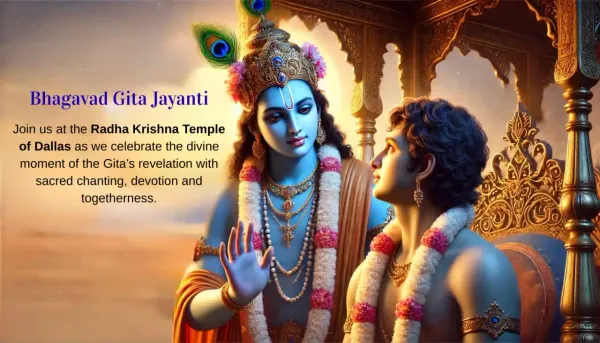
The eighteenth chapter of the Bhagavad Gita, Moksha Sannyasa Yoga, serves as the culmination of Lord Krishna’s spiritual discourse to Arjuna. Here, Krishna synthesizes the teachings of the previous seventeen chapters, clarifying the distinctions between Sannyasa (renunciation of actions) and Tyaga (renunciation of the fruits of actions), thereby illuminating the final path to liberation (moksha).
🔗 Read Chapter 18 full verses here
Sannyāsa vs. Tyāga: What Should We Renounce?
📖 Bhagavad Gita 18.2
“Some sages declare that renunciation of all works is sannyāsa, while others say that renunciation of the fruits of all works is tyāga.”
🔗 Read Verse
Spiritual Insight: The King Who Wanted to Renounce
Once there lived a powerful king who had ruled with might and wisdom. But one day, he was struck with a realization: “The true goal of life is not worldly conquest but God-realization.” Determined to walk the spiritual path, he went in search of a Guru who could guide him.
Clad in regal attire, the king approached a renowned saint. The Guru glanced at him and said simply, “Go renounce everything, and then come to me.”
Puzzled, the king thought, “Perhaps my kingly robes gave the wrong impression.” So, he returned in simple clothes and once again requested the Guru to accept him as a disciple. Again, the saint said, “Go renounce everything and then come.”
More confused than before, the king thought, “Even these simple clothes must be a form of attachment.” In complete sincerity, he returned a third time—naked. This time, the Guru became stern. “I told you—renounce everything! Do not come again unless you do.”
Now shattered and deeply introspective, the king sat under a tree and resolved: “I will meditate here until death. If I do not understand what is left to renounce, then let me die trying.”
For five days he sat, still as stone—neither eating nor speaking. Finally, the Guru came to him.
He said, “Oh King, get up.”
There was no response.
Then he said, “Oh Tyagi, arise.”
Still no movement.
Finally, the saint said with deep affection, “Oh my dear disciple, get up.”
This time, the king opened his eyes, rose, and fell at the Guru’s feet.
The Guru smiled and said,
“Now you are truly ready. You have renounced even the thought—‘I have renounced everything.’* That was the final ego to drop. You are now a true renunciant—not in appearance, but in spirit.”*
What Is True Renunciation?
Lord Krishna, in Bhagavad Gita 18.2, addresses an age-old debate:
Some consider sannyāsa to be giving up all action,
Others say tyāga is renouncing the fruits of action.
But Krishna clarifies later:
🔑 True renunciation lies not in abandoning action, but in relinquishing attachment and doership.
Puranic Example: King Janaka
In the Ramayan, King Janaka stands as a shining example of a Tyagi. As a Rajarshi, he was immersed in royal responsibilities, yet acted without selfish motives. Every decision, every duty was an offering to God—done with full engagement but zero attachment. He didn't renounce his kingdom, but he renounced within.
Lesson for Us
Renunciation (sannyāsa) is often misunderstood as abandoning life, duties, or society. But the Bhagavad Gita emphasizes tyāga—the inner spirit of detachment—as the true path to liberation.
✅ Don’t give up your work.
🚫 Give up the ego of doing and the craving for outcomes.
🙏 Dedicate all actions to God, like King Janaka.
🪷 And like the unnamed king in our story, even renounce the pride of renunciation.
Only then does the heart become a true vessel for Divine Grace.
Three Types of Renunciation (Tyaga)
📖 Verse 18.4
“Renunciation of prescribed duties is not appropriate. But abandonment of the fruit of action is considered wise.”
🔗 Read verse
Krishna classifies renunciation into:
- Sattvic Tyaga – Giving up actions out of duty, with no desire for reward.
- Rajasic Tyaga – Giving up action out of fear, difficulty, or ego.
- Tamasic Tyaga – Abandoning duties out of ignorance.
🌿 Sāttvic Tyāga
Definition: Renouncing attachment to the fruits of action while continuing to perform one’s duty — done with wisdom and devotion.
🎯 Arjuna choosing to fight in the Kurukshetra War after receiving Krishna’s guidance.
Initially reluctant, Arjuna overcomes personal grief and confusion and decides to fight — not for personal gain or revenge, but as a selfless duty (dharma) to uphold righteousness.
🧘♂️ This is Sāttvic Tyāga: renouncing the desire for outcome, but performing duty with full dedication.
🔥Rajasic Tyāga
Definition: Renouncing actions not out of wisdom, but due to fear, discomfort, or pride.
📌 Modern Example:
A capable professional avoids taking a leadership role at work because they fear criticism, stress, or the possibility of failure — even though the role would allow them to help others and grow.
They say, “It’s not for me,” but deep down, it’s fear or ego talking.
➡️ This is Rajasic Tyāga: giving up duty or opportunity due to inner insecurity or desire to protect one’s image.
Tamasic Tyāga
Definition: Abandoning one’s responsibilities out of ignorance, confusion, or laziness.
📌 Modern Example:
Adult children neglect their aging parents, saying, “They’ll manage somehow” or “I have my own life to live,” not realizing their dharmic duty to care for those who once cared for them.
This neglect isn’t based on spiritual renunciation, but on ignorance, indifference, or selfishness.
➡️ This is Tamasic Tyāga: giving up a sacred duty without understanding its moral and emotional significance.
Understanding Duty (Swadharma)
📖 Verse 18.47
“It is better to perform one’s own duties imperfectly than to master the duties of another.”
🔗 Read verse
Krishna emphasizes that each soul has a unique role aligned with their nature (guna). Doing one’s prescribed duty, even with flaws, is more spiritually beneficial.
Hanuman’s Role in the Ramayan: A Perfect Example of Swadharma

Hanuman never aspired to be a king, a scholar, or a warrior of fame. Though blessed with immense strength, wisdom, and divine powers, he saw himself simply as a sevak — a humble servant of Shri Ram. His sole purpose was to fulfill the will of his Lord. Whether it was leaping across the ocean, setting Lanka ablaze, or carrying the Sanjeevani mountain, Hanuman acted not out of pride or ambition, but out of love and duty.
His loyalty, humility, and might all flowed from living his swadharma — his individual duty as ordained by his inner nature. He didn’t try to imitate others or seek personal glory. In this way, Hanuman exemplifies the essence of dharma lived with perfection.
🕉️ The Taittiriya Upanishad echoes this very spirit:
"Satyam vada, Dharmam chara" – Speak the truth. Walk the path of dharma.
This ancient wisdom teaches us that true success in life is not in becoming something we are not, but in sincerely living our own divine purpose.
Chaitanya Mahaprabhu’s Teaching: The Soul’s Eternal Identity

Śrī Chaitanya Mahāprabhu, one of the greatest saints of Bhakti Yoga, beautifully declared:
"jīvera svarūpa haya — kṛṣṇera nitya-dāsa"
The constitutional nature of the soul is to be the eternal servant of Shri Krishna.
This teaching reveals a timeless truth: we are not this body or mind, but eternal souls whose natural position is loving service to the Supreme Lord. Just as a leaf thrives when connected to the tree, we thrive spiritually when we align with our original identity as sevaks of God.
Hanuman, though a devotee of Shri Ram (an incarnation of Krishna), perfectly embodied this principle. His devotion was not occasional or conditional — it was nitya (eternal), selfless, and full of prema (divine love). He serves as a divine role model for all spiritual aspirants.
Five Factors of Action
📖 Verse 18.14
“The body, the doer, the senses, various kinds of efforts, and Divine will—these are the five factors of all action.”
🔗 Read verse
No action is isolated. Krishna lists five components essential for any work to succeed. Divine will (daivam) is the hidden hand behind all results.
Puranic Example: Gajendra Moksha

In the Bhagavatam, Gajendra the elephant, caught by a crocodile, struggled with all his strength but was only saved when he surrendered and invoked the Lord. His own effort wasn't enough—Daivam (God’s grace) completed the action.
Lesson: Surrender and humility are essential even in action.
The Threefold Division of Knowledge, Action, and Doer
📖 Verse 18.20
“That knowledge by which one undivided, imperishable reality is seen in all beings—is sāttvic.”
🔗 Read verse
The Gita explains that knowledge, actions, and the doer can all be of sattvic, rajasic, or tamasic nature.
Story: Sage Narad’s Divine Vision
Sage Narad saw Narayana in every being—his love extended to all. His knowledge was sattvic—seeing unity in diversity. He served the Lord by serving His creation.
Patanjali Yog Sutra Insight: “Ishvarapranidhanad va” – Devotion to the Supreme brings clarity and peace (1.23).
Lesson: True wisdom is not intellectual but experiential—seeing God in all.
The Threefold Fruits of Action
📖 Verse 18.12
“For those who do not seek fruits, no karma binds them. But for the attached, threefold fruits—pleasant, unpleasant, and mixed—accrue.”
🔗 Read verse
According to one’s guna, one faces consequences. Sattvic action brings purity, Rajasic action brings sorrow, and Tamasic action brings delusion.
Ramayan Insight: Kaikeyi’s Rajasic Action
Kaikeyi, influenced by her maid Manthara, demanded Ram's exile. Though done with intelligence, the action was rajasic, rooted in ego and desire—bringing her lifelong grief.
Lesson: Even seemingly clever actions can lead to suffering if not guided by selflessness.
The Supreme Knowledge: Surrender and Devotion
📖 Verse 18.66
“Abandon all varieties of dharma and just surrender unto Me alone. I shall liberate you from all sinful reactions; do not fear.”
🔗 Read verse
This is arguably the most famous verse of the entire Gita. Krishna asks Arjuna to let go of even the obsession with righteousness and simply surrender with faith.
Mahabharat Parallel: Draupadi’s Surrender

During her humiliation, Draupadi tried to protect herself. Only when she gave up and cried out “Hey Krishna!” with full surrender did her divine sari protection begin. That moment of helpless surrender became her liberation.
Life of Saints: Meera Bai
Despite royal opposition, poison, and exile, Meera surrendered wholly to Krishna. Her bhakti led her to become immortal in devotion.
Lesson: The highest action is not action—it is surrender.
Liberation Through Bhakti
📖 Verse 18.55
“Only by devotion can one truly know Me, see Me, and enter into Me.”
🔗 Read verse
Devotion (bhakti) is the bridge between the soul and God. Intellectual understanding alone is not enough—real union comes through loving surrender.
Puranic Tale: Dhruva’s Devotion
As a child, Dhruva meditated on Narayana with intense devotion. Despite being rejected by his father and stepmother, he focused single-mindedly on the Lord. The Lord manifested before him due to his unwavering bhakti.
Upanishadic Echo: “Bhaktir evainam nayati” – Only devotion leads to Him (Mundaka Upanishad).
Lesson: Love for God overcomes karma, time, and fate.
Summary: The Path to Freedom
📖 Verse 18.72
“O Arjun, have you heard this with your attentive mind? Has your confusion been dispelled?”
🔗 Read verse
The Gita ends with Krishna asking Arjuna if his ignorance has been removed. Arjuna replies with strength and clarity—ready to act as per the Lord’s will.
Verse 18.73
“My illusion is now gone. I am firm. I will act according to Your word.”
🔗 Read verse
Conclusion: The Gita's Ultimate Message
Bhagavad Gita Chapter 18 is not merely a conclusion—it is a final spiritual transformation. From the battlefield to the altar of surrender, Arjuna evolves into a warrior of divine will.
Swami Mukundananda explains:
“When our intellect surrenders to divine wisdom, and our heart overflows with loving devotion, we become free even in bondage. That is Moksha.”
Key Lessons from Chapter 18
| Theme | Lesson |
|---|---|
| Renunciation | Don’t run away from action. Detach from results. |
| Duty | Do your Swadharma with integrity. |
| Divine Grace | Recognize the five factors of all success. |
| Devotion | Surrender is the final key to liberation. |
| Knowledge | Real wisdom sees unity in diversity. |
Final Reflection
Moksha does not require a Himalayan cave or abandoning the world—it requires an inner revolution. When we align our actions with dharma, our knowledge with truth, and our heart with love for the Divine, we are free—here and now.
🙏 “Yatra Yogeshwara Krishna, yatra Partho dhanur-dharaḥ” – Where there is Krishna and Arjuna, there is victory.” (BG 18.78)
🔗 Read final verse
FAQ
1. What is the central theme of Bhagavad Gita Chapter 18?
Chapter 18, Moksha Sannyasa Yoga, synthesizes the Gita's teachings, focusing on the concepts of renunciation (Sannyasa) and relinquishment (Tyaga) as paths to spiritual liberation.
2. How does Krishna differentiate between Sannyasa and Tyaga?
Krishna explains that Sannyasa involves renouncing actions motivated by desire, while Tyaga refers to relinquishing attachment to the fruits of actions, emphasizing inner detachment over external renunciation.
3. What are the three types of Tyaga mentioned in the chapter?
The Gita outlines three types of Tyaga: Sattvic (renouncing attachment and performing duty selflessly), Rajasic (abandoning duties out of fear or discomfort), and Tamasic (neglecting responsibilities due to ignorance).
4. How does Chapter 18 address the concept of Swadharma?
Krishna emphasizes performing one's own duty (Swadharma) imperfectly is better than performing another's duty perfectly, highlighting the importance of authenticity and personal responsibility in spiritual practice.
5. What is the significance of verse 18.66 in the Bhagavad Gita?
Verse 18.66 is a pivotal moment where Krishna urges Arjuna to abandon all forms of dharma and surrender solely to Him, promising liberation from all sins, encapsulating the essence of devotional surrender.
Reference Links
- Bhagavad Gita Chapter 18 – Moksha Sannyasa Yoga
- Verse 18.2 – Sannyasa vs. Tyaga
- Verse 18.66 – Ultimate Surrender
- Detailed Commentary on Chapter 18
- Understanding Tyaga in the Bhagavad Gita